






How HPV and Oral Cancer are Related
September 4th, 2018

Did you know that Human Papilloma Virus (HPV) and oral cancer are linked? This information may prevent you or a loved one from suffering from oral cancer if a diagnosis is made early. Dr. Rick Johns and our team want you to understand how you can prevent the spread of oral cancer and protect yourself if you have HPV.
People don’t often speak up about this common virus, but we believe it’s important to educate yourself to prevent the potential spread of oral cancer. According to the Centers for Disease Control and Prevention, up to 80% of Americans will have HPV infections in their lifetime without even knowing it. Symptoms usually go unnoticed, though it’s one of the most common viruses in the U.S. The body’s immune system is generally able to kill the HPV infection without causing any noticeable issues. If you think you might have HPV, talk with primary care physician about getting the preventive vaccine or taking an HPV test.
According to the Oral Cancer Foundation, “HPV is the leading cause of oropharyngeal cancers (the very back of the mouth and throat), and a very small number of front of the mouth, oral cavity cancers. HPV16 is the version most responsible, and affects both males and females.”
Common signs of oral cancer may include:
- Ulcers or sores that don’t heal within a couple of weeks
- Swelling, lumps, and discoloration on the soft tissues in the mouth
- Difficult or painful swallowing
- Pain with chewing
- Persistent sore throat
- Numbness of the mouth or lips
- Lumps felt on the outside of the neck
- Constant coughing
- Earaches on one side of your head
If you experience any of these side effects, please contact Rick Johns Dental as soon as possible.
We hope this information will help you understand the interactions between HPV and oral cancer. Please remember to take precautionary steps if you notice anything out of the ordinary with regard to your oral health. If you have any questions or concerns, contact our Highland, IN office.
Considerations When Picking the Right Mouthwash
August 28th, 2018
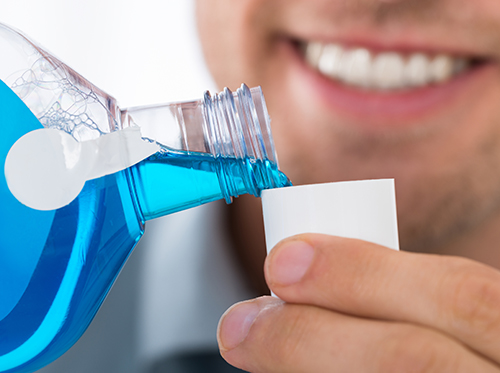
A solid oral health routine begins with daily brushing, flossing, and rinsing. Without a consistent oral health regimen, you may begin to experience tooth decay and bacterial infections. Few patients ask Dr. Rick Johns about different mouthwash options, so we’ve put together a list of the conditions that mouthwashes can treat. This should help you decide which oral rinse would be best for you.
Gum Health
Antiseptic mouthwashes reduce large amounts of bacteria on and near the gum line and generally help to decrease your chances of developing gingivitis. The key ingredients of antiseptic mouthwashes are antibacterial and antimicrobial items. Antiseptic mouthwash is a preferable option if you are concerned about the general gum health of your mouth.
Fluoride
Fluoride is a great tool for preventive tooth decay treatment. It prevents tooth decay and is great for oral health in general because it kills germs that can live in your mouth. Fluoride also builds stronger teeth. If you’re a bottled water drinker, Dr. Rick Johns may recommend that you purchase a simple fluoride rinse to use after brushing.
Bad Breath
Fluoride mouthwash can be used to fight any bad breath issues you may be facing. It’s designed to combat any bacteria that might be building up in your mouth. Most mouthwashes will help eliminate bad breath, but some are specifically designed to address this difficult problem. If you feel as though this might be turning into a chronic problem, please contact Dr. Rick Johns to discuss other options that would be effective for treating your symptoms.
American Dental Association (ADA Approval)
The ADA reviews all mouth rinses for safety measures and to prove effectiveness. Any mouthwash approved by the ADA has met strict guidelines according to whether the manufacturer’s claims are supported with scientific evidence. If you’re looking for a quality mouthwash, look for one that has the ADA seal of approval to ensure you have a great rinse for your mouth.
Considerations
When you’re trying to decide which mouthwash to pick, contact our Highland, IN or ask Dr. Rick Johns during your next appointment. If you experience a burning sensation in the soft tissues of your mouth, be sure to discontinue use immediately. Avoid letting children under age six use a mouth rinse, and be sure to keep all mouthwashes out of the reach of children, because they contain alcohol and other substances that could be harmful.
My teeth don't line up any more. Why?
August 21st, 2018

If your teeth don't line up like they used to any more, you may be suffering from temporomandibular joint disorder, often called TMD. This is a term that can actually be applied to any condition that occurs because the temporomandibular joint (TMJ) is inflamed.
The temporomandibular joint is essentially the hinge that holds your lower jaw to your skull, and when it is inflamed or damaged in any way, it can be extremely painful. You have two temporomandibular joint, one on each side of your jaw, and it is typical to experience TMD in both sides at the same time.
Shifting of the Teeth
The reason that your teeth may not line up as they once did is that the ball and socket joints are often out of alignment and, as mentioned above, often very inflamed as a result. In order to correct the problem, Dr. Rick Johns may prescribe dental orthotics such as a lower jaw splint.
Sometimes, the wisdom teeth can play a role in the shifting of the teeth as well. If shifting wisdom teeth is combined with TMD, it may be necessary to have your wisdom teeth removed. Dental splints may follow if your teeth don't shift back to their proper positions on their own.
TMD is certainly a difficult thing to deal with, so if you experience your teeth shifting, scheduling an appointment at our Highland, IN office is the smartest course. We want to help you get your smile back, so give us a call anytime.
Three Signs You May Have Gingivitis
August 14th, 2018

Gingivitis, or inflammation of the gums, is an early stage of gum disease. If you have gingivitis, it’s important to visit Dr. Rick Johns to get proper treatment, since home care isn’t enough to get rid of the plaque that leads to tartar and eventually to gum disease. Monitor yourself to see if you have these signs of gingivitis, and get help as soon as you can to prevent the progression to periodontitis. Your vigilance could save your teeth.
1. You have one or more risk factors.
Having risk factors for gingivitis doesn’t mean that you have or will get the disease, but it does mean that you should be especially watchful. You’re more likely to get gum disease if you have the following risk factors:
- You are a smoker.
- You are a female going through puberty, pregnancy, or menopause.
- You have diabetes.
- You have a compromised immune system, as is the case if you have HIV/AIDS.
- You have a family history of gum disease.
2. You have inflammation in your gums.
Gingivitis is inflammation of the gums, and that is a tell-tale sign of the condition. Gingivitis or periodontitis can involve a bacterial infection, and inflammation is your body’s response to an injury or infection. The four standard signs of inflammation are pain, redness, swelling, and a higher temperature than normal.
If you have inflammation around your teeth, your gum disease may have progressed to the more serious condition of periodontitis. Dr. Rick Johns can evaluate your case using a scope, or small ruler. The ruler is used to measure the pockets around your teeth, with a depth of one to three millimeters being normal.
3. Your teeth seem to be moving around.
Loose teeth are a classic sign of periodontitis. You may also have them if you have gingivitis. They can occur when your gum line recedes, or as the result of having soft bone in your jaw.
You might also notice other signs of your teeth moving around. For example, they may seem to be oddly spaced, or they could be separating from each other. You might also notice that your partial dentures don’t fit properly anymore, even if they’re not that old.
Gingivitis is a very treatable condition, but you need the help of Dr. Rick Johns to keep it in check. Contact our Highland, IN office to schedule an exam today!
