






Are you at risk for tooth erosion?
June 12th, 2018

Many people consume carbonated or sugary drinks and acidic foods every day but have no idea those beverages may be harming their teeth, making them vulnerable to tooth erosion. The acid in the foods we eat and drink can cause tooth enamel to wear away, making your teeth sensitive and discolored. Dr. Rick Johns will tell you that in many cases, what’s important is not what you eat and drink, but rather how you consume it.
What is tooth erosion?
Tooth erosion is the loss of tooth structure caused by the weakening of dental enamel, which is the strongest substance in the human body. Enamel is the thin, outer layer of hard tissue that helps maintain the tooth’s structure and shape. When the enamel is weakened, it exposes the underlying dentin, causing your teeth to appear yellow.
What causes tooth erosion?
Tooth erosion may occur when the acids in the foods and beverages you eat and drink, as well as other factors we will discuss later, weaken the enamel on your teeth. Typically the calcium contained in saliva will help remineralize (strengthen) your teeth after you consume foods or drinks that contain some acid. However, the presence of a lot of acid in your mouth does not allow for remineralization to happen.
Acid can come from many sources, including the following:
- Drinking carbonated or fruit drinks. All soft drinks (even diet varieties) contain a lot of acid and are capable of dissolving enamel on your teeth. Bacteria thrive on sugar and produce high acid levels that can eat away at enamel.
- Eating sour foods or candies. All those sour candies may taste great, but these treats can be acidic to your teeth. Sour and fruity candy, such as Starburst and Skittles, are the worst for your teeth since these candies have a low pH value, which is known to ruin enamel.
- Low saliva volume. Saliva helps prevent decay by neutralizing acids and washing away leftover food in your mouth.
- Acid reflux disease. Acid reflux, or GERD, brings stomach acids up to the mouth, where the acids can erode enamel.
- Bulimia or binge drinking. These conditions can cause tooth damage because they frequently expose teeth to stomach acids.
- Wear and tear. Brushing your teeth too vigorously or grinding your teeth at night can erode enamel.
What are the symptoms of tooth erosion?
Acid wear may lead to serious dental problems. When your tooth enamel erodes, your teeth become more vulnerable to cavities and decay, and you may begin noticing the following symptoms:
- Severe sensitivity or tooth pain when consuming hot, cold, or sugary foods or drinks
- Tooth discoloration
- Rounded teeth
- Transparent teeth
- Visible cracks in teeth
- Cupping, or dents, that show up on the biting or chewing surfaces of the teeth
What you can do to prevent tooth erosion
- Reduce or eliminate altogether your consumption of carbonated drinks. Instead, sip water, milk, or tea.
- If you must consume acidic drinks, drink them quickly and be sure to use a straw so that the liquid is pushed to the back of the mouth. Don’t swish them around or hold them in your mouth for a long period of time.
- Instead of snacking on acidic foods throughout the day, we suggest eating these foods just during meal times in order to minimize the amount of time the acid makes contact with your teeth.
- After consuming highly acidic food or drinks, rinse with water to neutralize the acids.
- Chew sugar-free gum to produce more saliva, as this helps your teeth remineralize.
- Brush with a soft toothbrush and be sure your toothpaste contains fluoride.
- Dr. Rick Johns may also recommend daily use of a toothpaste to reduce sensitivity (over-the-counter or prescription strength) or other products to counter the effects of erosion.
It’s important to know that the majority of dental problems, such as tooth erosion, do not become visible or painful until they are advanced. And, unfortunately, serious oral issues are painful and expensive to treat. A deep cleaning twice a year by our team at Rick Johns Dental is the best way to hit all the spots you may have missed with brushing and flossing and prevent any issues that may have gone unseen.
Make sure your teeth get the professional attention they deserve! If you are overdue for your next checkup or cleaning, please give us a call to schedule an appointment at our conv
Teeth Grinding Can Damage Your Teeth
June 5th, 2018

Grinding of the teeth, also known as bruxism, is a serious condition from which nearly ten percent of Americans suffer. It’s a mechanical reflex that often happens during slumber. Unfortunately, most people don’t recall grinding their teeth when they awaken.
This makes it difficult to catch the condition before serious damage occurs. Some people notice soreness in their jaw, shoulder and neck pain, or even headaches. Others aren’t so lucky and don’t feel any pain until a professional notices they have developed cracked teeth, receding gums, and jaw problems.
Dr. Rick Johns and our team hope to prevent teeth grinding before serious health concerns arise. Let’s go over the reasons for grinding as well as preventive tips to help you feel better fast.
Why do you grind your teeth?
The most common reasons for teeth grinding include:
- Stress
- Anxiety
- Aggression
- Poor muscle control
- Acid reflux
- Sleep apnea
- Complications from certain disorders
It’s worthwhile to understand the reason you’re grinding your teeth, but it’s even more vital to treat the issue quickly. You can take measures to alleviate the pain you may be experiencing, such as applying a warm wash cloth to your jaw, taking muscle relaxants, massaging the jaw muscles, visiting a chiropractor, or doing physical therapy.
Prevention
To protect your oral health and jaw bones, try these preventive measures:
- Reduce the amount of stress in your life
- Drink plenty of water every day
- Avoid chewing gum or chewy foods
- Get plenty of sleep each night
- Reduce or stop alcohol and caffeine consumption
- Get a custom mouthguard from Rick Johns Dental
Dr. Rick Johns and our team want to make sure you’re properly treating your teeth grinding issues. Feel free to call our Highland, IN office if you think you may be suffering from this condition, or have questions regarding a treatment plan.
Teeth grinding can lead to far more serious health issues, and should be ended before it becomes a major concern.
Easing the Teething Blues
May 29th, 2018

Every moment of your baby’s first year of life is precious, since every day your child grows a little, develops new skills, and discovers new things. Most of it is wonderful, but parents don’t like to see their babies in pain. That’s why teething can be such a hard experience. However, you can take steps to make it easier for you and your baby.
What to Expect
Most babies begin teething around the age of six months, when the lower central incisors start to appear. Shortly after this time, the upper central incisors poke through, followed by the lateral incisors, first molars, canines, and second molars. Unfortunately, you’ll probably know that your baby is teething not because you see these teeth come in, but because your baby will be in discomfort. These are some of the signs to watch for when you’re expecting your baby to begin teething.
- Tender and sore gums
- More drooling than before
- Being crankier than usual
- Chewing on hard objects
What You Can Do
As a parent, you want to do everything you can to make your child more comfortable. These are some approaches that Dr. Rick Johns and our team recommend:
- Take a clean moistened wash cloth or use your own washed finger to rub your baby’s gums and provide relief due to the pressure.
- Provide a firm rubber teething ring for your baby to use, but don't use the type that is filled with liquid.
- Use a bottle. A bottle filled with cold water can be soothing. Don’t give your baby formula, milk, or juice constantly because the sugar can cause tooth decay.
- Medications can help for extreme crankiness. Infant Tylenol is an example, but it’s best to check with your pediatrician before giving your baby medications.
You might also want to take special care to dry the drool. It’s not just to keep yourself and your baby dry. Keeping your baby’s skin dry can help prevent irritation.
When to Visit Us
Once your child’s first tooth comes in, it’s time to start thinking your baby’s first trip to our Highland, IN office. The American Dental Association suggests that you bring your child to the dentist within six months of the appearance of the first tooth, or at about one year of age. Dr. Rick Johns can do a quick check for tooth decay, and we’ll make sure you know how to take care of your child’s new teeth.
Make Brushing With Your Child Fun!
May 22nd, 2018
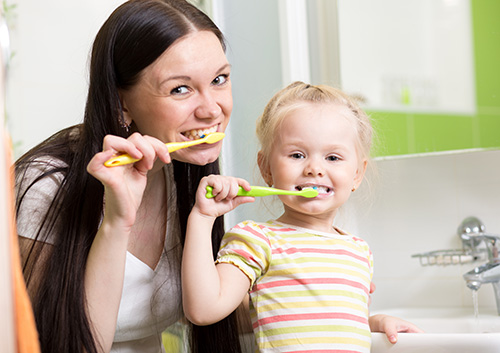
It’s no secret that kids and adults have different priorities: your duty is to raise a happy, healthy child, but your little one’s only priority may be to have fun. When it comes to brushing teeth, it can be hard to combine a healthy habit with having fun. You might fear it can’t be done, but with a little creativity, brushing time can be a great experience for both of you!
Make It a Party
Brushing time doesn’t have to be a chore when you throw a little party! Get Mom and Dad together so the whole family can brush their teeth at the same time.
Let your child choose a song to dance to while you all brush for the required two minutes. Your son or daughter may grow to love this silly routine, especially when the parents are clearly dedicated to brushing their own teeth as well.
Big Kid Decisions
Kids love the responsibility of making “big kid” decisions. Keep a variety of toothbrushes, colors of floss, and toothpaste flavors on hand so they can choose something “new” each time they brush, just like when they visit our Highland, IN office.
Not only can this help them grow more comfortable with the idea of seeing the dentist, but they’ll love having the responsibility of picking what would be fun at brush time.
Practice Makes Perfect
It’s true that the only way to get better at something is to practice, practice, and practice. Have your child practice brushing on his or her favorite stuffed animal, and use that opportunity to teach your youngster how to hold the brush and use circular cleaning motions. Showing how you brush your own teeth can also be worthwhile.
There’s An App For That
Did you know there are lots of fun apps that encourage good brushing habits among children? Brands like Oral-B and Aquafresh have free apps you can download on your phone.
The child gets to select a character, scenery, and a song he or she would love to accompany the task of brushing. If you have a daughter, she might like to use the Tooth Fairy Timer, which allows her to pick her very own fairy as her brushing buddy.
The important things to remember when you seek to establish good brushing habits is to keep it fun and stay consistent with your routine. It may take some getting used to, but after a while your child will become familiar with brushing and might even look forward to the new dental routine.
