






Zirconia Dental Implants
January 2nd, 2018

Since dental implants first started being implemented in the 1980s, they have been primarily made of titanium. Recent advances in implant technology have allowed dental implant manufacturers to shift from all-metal implants, to part-metal and part-ceramic implants, to the newer all-ceramic or zirconia implants.
Zirconia implants are made of high-impact resistant ceramic called tetragonal zirconia polycrystal (ZrO2+Y2O3). They remedy many of the issues and complaints doctors and patients have with traditional metal implants and have several advantages—let’s take a look at some of them.
Advantages of Zirconia Implants
- Do not cause allergic reactions – Although titanium is considered non-toxic, some people still have allergic reactions to titanium. Zirconia implants are inert, non-corrosive, and hypoallergenic.
- Have been used for decades in medical applications – Millions of patients have had zirconia used safely and effectively as the base material for their hip replacements. The zirconia used for medical applications also undergoes strict radiation monitoring to ensure its safety for use within the body.
- They are incredibly strong – Unlike titanium implants, zirconia offers a much higher degree of resistance to scratching, corrosion, and fracture. The aerospace industry even uses zirconia (ZrO2) due to its high resistance to heat and fracture. This all means a safer and more aesthetically pleasing result for the patient.
- One-piece design is more hygienic – Zirconia implants are a one-piece design, meaning there is nowhere for bacteria to build up or liquids to penetrate like with titanium implants. They are highly biocompatible (how a material reacts with the human body) which leads to healthier gums and no risk of corrosion.
- Implant margin is at gum not bone level – With titanium implants the margin (or gap between the implant and the tooth) is at bone level, which can lead to bacterial buildup since you can’t brush there. The zirconia implant margin, which is at gum level, allows you to brush and clean your implant and restoration regularly.
If you are in need of a restorative dental implant, it would be wise to consider zirconia due to its many advantages. It might not work in every situation, but feel free to discuss your options with Dr. Rick Johns or one of our Highland, IN staff members.
Smile, the New Year is Almost Here!
December 26th, 2017
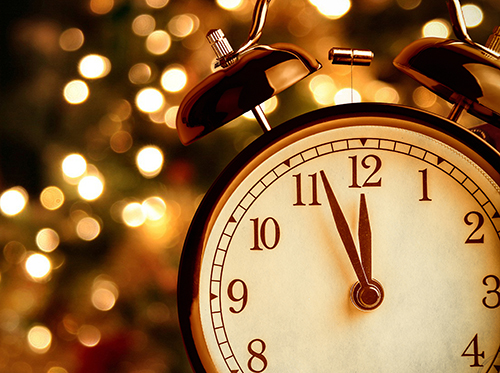
We’ve been celebrating the new year for a really, really long time. It goes way back, but it started formally in 1582, when Pope George XIII made January 1st the official holiday for ushering in the new year. The idea was to yell, cheer, and blow horns to scare away all the evil spirits of the previous year with the hope that the new one would be filled with happiness and opportunity.
While scaring away evil spirits isn’t what’s on our mind these days, we still ring in the New Year by cheering and hollering with friends and family. It’s a time to set new goals, refocus on old ones, and look forward to all the surprises the coming year will bring.
Whether you’re saying hello to the New Year snuggled up at home on your couch in the Highland, IN area or by gathering your friends for a social celebration, here are some tips to help ensure you welcome this new chapter with a smile.
Tips for a great New Year’s Eve celebration from Rick Johns Dental
- Stay safe. This one’s vital, because nothing puts a damper on your party like an emergency trip to the hospital. Stay responsible and try to plan ahead, whether that means taking a taxi, staying with a friend, or recruiting a designated driver. Do what you have to do to keep yourself and everyone around you safe.
- Spend time with the people you love most. The way we see it, the whole point of the holiday season is to cherish your family and friends. Regardless of what you’re doing, make sure there’s something for everyone. It’s essential to do something the whole group will enjoy!
- Smile! Whether you get all dressed to go out or have a quiet gathering with family and friends, make sure you accessorize with a smile. There’s always something to smile about!
We can all agree that change can be scary sometimes, but ringing in the New Year is an observance we all welcome with open arms. We hope you’ll enjoy this transitional holiday in a fun, healthy, and safe way. You have endless possibilities ahead of you!
From Dr. Rick Johns, have a fantastic New Year!
Thumb Sucking, Pacifiers, and Your Baby's Teeth
December 19th, 2017

Sucking is a common instinct for babies and the use of a pacifier or their thumb offers a sense of safety and security, as well a way to relax.
According to the American Academy of Pediatric Dentistry, the majority of children will stop using a pacifier and stop sucking their thumb on their own between the ages of two and four years of age. Prolonged thumb sucking or use of a pacifier can have dental consequences and needs be taken care of sooner, rather than later.
Many dentists favor pacifier use over thumb sucking because it makes it easier for parents to control and even limit the use of a pacifier. If thumb sucking lingers, the same strategies used to break the baby from using the pacifier can be used for thumb sucking.
Precautions
- Try to find "orthodontically correct" pacifiers, as they may reduce the risk of dental problems.
- Never dip a pacifier in sugar or honey to calm the baby.
- Give your baby a bottle of water at bedtime, never juice.
Dental Complications
Long term pacifier use can lead to an assortment of dental complications including:
- The bottom teeth leaning inward
- The top teeth slanting outward
- Misalignment of the baby’s jaw
The risk of any or all of these things happening is greatly increased if thumb sucking and pacifier use is sustained after the baby’s teeth start to come in.
Breaking the Thumb Sucking and Pacifier Habit
Most toddlers and children will stop sucking their thumb or using a pacifier between the ages of two and four on their own. However, if intervention is necessary here are a few tips to help your child break the habit:
- Slowly decreasing the use of a pacifier can be effective for many children. This method does not work very well with thumb sucking.
- Thumb sucking can be more difficult to break. Dr. Rick Johns may recommend using an over the counter cream that you put on the child’s thumb; it doesn’t taste good and usually does the trick.
- Rewards can also help with the process.
- If these simple commonly used strategies do not work, there are oral devices that will prevent a child from sucking their thumb or a pacifier.
Talk to Dr. Rick Johns and our team, as we have many tricks up our sleeves that will be effective in breaking your child’s thumb sucking or pacifier use.
Energy Drinks and Dental Health
December 12th, 2017

Are energy drinks bad for your teeth? Many of our patients at Rick Johns Dental ask us this question, so here’s the scoop.
Energy drinks have been on the rise, taking up more and more space on grocery store shelves. Drinks such as Red Bull, 5-Hour Energy, Monster Assault, Rockstar, and the like promise to jump-start your day, give you more energy, and help you feel more alert. But they also do a lot more than that. Turns out, they do a pretty good job of stripping your teeth of enamel, which is a very bad thing.
Many of these energy drinks are loaded with a lot of citric acid. In addition, they are laden with preservatives (not to mention sugar), not only to enhance flavor, but extend shelf life. While enamel loss, tooth decay, teeth sensitivity, and cavities cannot be blamed entirely on energy drinks (improper oral hygiene at home and lack of professional dental care also play a role), they can wreak havoc on the health of your teeth and gums, especially when consumed in more than moderation. Over time, energy drinks can strip enamel, which is the outer layer that protects your teeth.
What can you do?
Although Dr. Rick Johns and our team aren't recommending you drink energy drinks at all, if you must drink one occasionally, there are a few things you can do to minimize the damage to your teeth.
- Drink through a straw.
- Don’t hold the drink in your mouth before swallowing.
- Rinse your mouth with water immediately after drinking this kind of beverage. Water helps both to neutralize the acid and to increase the production of saliva.
- Chew sugar-free gum immediately after, to increase saliva production.
- Don’t brush your teeth right after drinking an energy drink. Wait at least an hour instead, because the combination of the acid and brushing will further damage tooth enamel.
The best advice is to refrain from drinking energy drinks altogether. One of the best hydrators is water. Water is a natural energy-booster and hydrator, and it doesn’t contain calories.
Give us a call today at our Highland, IN office if you have any questions or concerns about energy drinks and dental health. We can provide additional tips and a treatment plan to help reduce enamel loss, eliminate tooth sensitivity, and repair cavities and tooth decay as a result of drinking energy drinks.
