






Is dairy crucial to my child's oral health?
March 29th, 2016

Healthy eating, combined with regular physical activity, plays a vital role in your child’s health and well-being. Dairy foods are naturally nutritious, packed with ten essential nutrients that help your child feel good for life. But did you know that dairy is also great for your child’s dental health? Our team at Rick Johns Dental will tell you that, in addition to providing large amounts of much-needed calcium, dairy products also help fight cavities! Dairy products have a specific role to play in dental health as they contain a unique combination of special anti-decay nutrients such as calcium, phosphorus, and the protein, casein. Cheese is especially useful, as eating a small piece of cheese after consuming sugary foods or drinks can help protect teeth and reduce the risk of tooth decay.
If you’d like to know more about the importance of dairy products in your child’s diet, or about any aspect of your child’s dental health, feel free to ask Dr. Rick Johns at your next appointment!
Early Detection is Key to Treating Oral Cancer
March 22nd, 2016

Every hour of every day, someone in North America dies of oral cancer, the sixth most common diagnosed form of the disease. The five-year survival rate is only 50 percent, and oral cancer is one of the few cancers whose survival rate has not improved.
This grim statistic may make you think that oral cancer is a particularly deadly form, when in fact the high death rate has more to do with how late in its development oral cancer is detected. Routine screening is the key to early detection and survival, and in our continuing efforts to provide the most advanced technology and highest quality care available to our patients at Rick Johns Dental, we proudly screen our patients for oral cancer.
So, who’s at risk for oral cancer?
Anyone can develop oral cancer, but some people are at a higher risk. These high-risk groups include those over the age of 50 and men, who are twice as likely as women to develop the disease. Smoking or chewing smokeless tobacco products, consuming alcohol excessively, and constant exposure to the sun at a young age are also risk factors.
How is oral cancer detected?
Dr. Rick Johns and our team at Rick Johns Dental suggest our patients perform a monthly self-examination to check for unusual red or white patches, sores, lumps, or thickenings anywhere inside the mouth, on the lips, or in the throat and neck area.
We encourage you to give us a call at our convenient Highland, IN office if you find any of these symptoms or if you have trouble swallowing or experience a chronic sore throat and hoarseness. During your visit, Dr. Rick Johns will inspect the oral tissues and neck to determine if abnormalities are present.
What happens if oral cancer is detected?
If we discover abnormal tissues during your visit, a biopsy will be required. The results from the biopsy will be sent to a laboratory to determine if the cells are cancerous or precancerous. If a diagnosis of cancer is made, surgery, as well as treatment such as chemotherapy or radiation may be necessary. Dr. Rick Johns and our team will work closely with your oncologist and other members of your medical team to ensure that you achieve the best possible oral health care both during and after treatment.
Finding out you have oral cancer can be devastating news. If you are concerned that you might be at risk for developing oral cancer, talk to us about screenings and other things you can do to reduce your risk. Through a routine visual inspection, Dr. Rick Johns and our team at Rick Johns Dental can often detect premalignant abnormalities and cancer at an early stage when treatment is both less expensive and more successful, and can potentially save your life. Ask us about a screening during your next visit!
St. Patrick's Day
March 15th, 2016

On March 17, everyone has a little Irish in them. St. Patrick’s Day is a joyous celebration of Irish heritage. The holiday originated as a commemoration of Saint Patrick, who brought Christianity to Ireland. The saint arrived in Ireland in 432 and earned the reputation of a champion of Irish Christianity. March 17th, the day of St. Patrick’s death, has been commemorated by the Irish for over 1,000 years. St. Patrick’s Day is still observed as a religious feast day by several Christian denominations, but it is better known in the public imagination as a rich celebration of Irish culture.
St. Patrick’s Day has been an official public holiday in Ireland since 1903. Each year, the Irish celebrate with a several-day festival that includes theater performances, music, fireworks, and festive parades. The celebration is also a public holiday in Northern Ireland, Montserrat, and Newfoundland and Labrador. In other parts of the world with heavy Irish populations, it is an unofficial celebration of Irish heritage. Parts of Great Britain, Canada, Argentina, South Korea, Switzerland, New Zealand, the United States, and Australia commemorate the holiday each year. Typical celebrations in these countries include drinking green beer, wearing green, eating traditional Irish foods, parades, and shamrock decorations.
Many people, Irish and non-Irish alike, take part in the “wearing of the green” on St. Patrick’s Day. In fact, the color originally associated with Saint Patrick was blue. His use of shamrocks to explain the Holy Trinity to the Irish made the green clover emblematic of the holiday, leading to the traditional green attire worn by thousands on St. Patrick’s Day. Other little-known facts about St. Patrick’s Day include the following:
- Each year, the United States and Ireland face off in a rugby competition called the “St. Patrick’s Day Test.”
- Montreal celebrates the holiday with an annual parade, which has been held each year since 1824. The Montreal city flag even features a shamrock in its corner, as a nod to its Irish heritage.
- The Guinness World Records named St. Patrick’s Day the “Friendliest Day of the Year.”
- Along with Valentine’s Day, St. Patrick’s Day is one of the most widely celebrated saint’s day in the world.
No matter your cultural heritage, St. Patrick’s Day is a great time to let loose and celebrate your inner Irish-ness! Don your greenest attire and exclaim “Erin go Bragh!” (Ireland forever!) to everyone you meet. From Dr. Rick Johns - have a great St. Paddy’s day!
How do I handle my child’s dental emergency?
March 8th, 2016
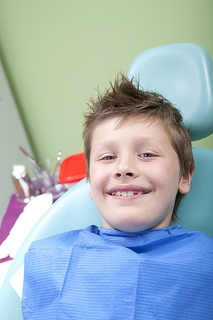
With children undergoing developmental dental changes and engaging in rough-and-tumble activities, dental emergencies can sometimes arise. If your child knocks out a tooth or experiences any type of oral discomfort, call Rick Johns Dental right away so we can provide you with a quick assessment and pain-free treatment.
Before an emergency occurs, it’s a good idea to stay informed about the problems your child may encounter. Here are a few things you should keep in mind about teething pain, loose baby teeth, and other common dental issues.
Teething Pain
Typically occurring in babies that are between four months and two and a half years old, teething may cause excessive drooling, tender gums, and some irritability. Giving your baby a cold teething ring or gently rubbing her gums with wet gauze or your finger may also make her feel better.
Loose Baby Tooth
It is normal for a child’s first set of teeth to become loose and fall out. On the other hand, if your child’s baby tooth is knocked loose, schedule an appointment with our office so we can assess whether any damage has been done.
Issues with Permanent Teeth
Sometimes a child’s permanent teeth will grow in before the baby teeth have fallen out. Even if this condition isn’t causing any discomfort, you should schedule an appointment with our office so we can determine whether your child’s permanent teeth are growing in correctly.
Bleeding Gums
Bleeding gums can result from a number of factors, including periodontal disease, rough brushing, or an injury to the gum tissue. If your child’s gums are bleeding heavily, call our office right away so we can address the situation. If you have time before your appointment, wash your child’s mouth with salted water and gently put pressure on the affected area.
Regardless of the type of dental issue your child has, you can always consult Dr. Rick Johns for further guidance. We make sure our emergency services are available 24 hours a day and seven days a week, so you have ready access to convenient and professional dental care that will have your child feeling better in no time.
