






National Brush Day
November 2nd, 2023

October 31—Halloween. Fourth Thursday in November—Thanksgiving. And, in between these two favorite autumn holidays, we have November 1—National Brush Day!
Okay, okay. Maybe National Brush Day isn’t quite as well-known as Halloween or Thanksgiving, but we take any opportunity to celebrate your dental health. So, let’s celebrate brushing!
After all, brushing is vital for healthy teeth and gums.
- Brushing is your first line of defense against plaque. Plaque forms all day long. Plaque sticks to your teeth. Plaque is filled with bacteria which produce cavity-causing acids. Brushing regularly means plaque won’t stay on your teeth long enough to cause serious tooth decay.
- Brushing is also important for your gum health. Angling your brush to carefully clean plaque and bacteria away from your gum line helps prevent gum disease.
- Tooth decay is the most common chronic disease among children and young adults. The leading cause of tooth loss in adults is gum disease. Good brushing habits help prevent tooth decay and gum disease—a win/win when it comes to your oral health.
To make the most of the time you spend brushing, let’s take a moment to review some basics on National Brush Day.
Are You Brushing Correctly?
- Big, broad brushstrokes aren’t the answer. Instead, use small up-and-down or circular strokes over each tooth and each tooth surface—outside, inside, and on the flat surfaces of your molars.
- Because plaque forms all day, you need to keep on top of it. Brushing at least twice a day for two minutes each time is a good general rule. Dr. Rick Johns will let you know the best brushing schedule for your individual needs.
- Brushes are meant to clean, not to scrub. You don’t need a heavy hand for cleaner teeth.
- Which also means, there’s almost never a good time to brush with a hard-bristled brush. Hard bristles, along with hard brushing, can actually damage your enamel and gum tissue. Stick to a soft-bristled brush for dental TLC.
Are You Taking Care of Your Brush?
- To clean away bacteria and viruses you might have picked up during the day, wash your hands before brushing and flossing.
- Shake your brush dry when you’re finished and then let it air dry upright with the handle pointing down. Only use a case for travel, and make sure it has air holes for ventilation. (Bacteria thrive in a wet environment.)
- If your toothbrush lives in the bathroom, close the toilet seat before flushing to avoid airborne particles.
- No matter how close you are to your family members or roommates, don’t share your toothbrush. Sharing doesn’t mean caring in this case—it means sharing germs. Your brush should keep a healthy distance from other brushes as well.
- And no matter how fond you are of your brush, be prepared to replace it often! Most brushes last three to four months at best, because bristles start to fray and can’t clean effectively after several months of use.
It’s no coincidence that National Brush Day comes right after Halloween, the most sugar-filled holiday of them all. So, how can we mark the occasion?
Treat yourself to a new toothbrush! Take a moment to review your brushing habits. If you have young children at home, spend two minutes brushing together to make sure they’re brushing effectively–they might even have some tips for you! Brushing your teeth properly is one of the easiest things you can do to protect your oral health. That’s something to celebrate!
Proper Brushing Techniques
November 1st, 2023
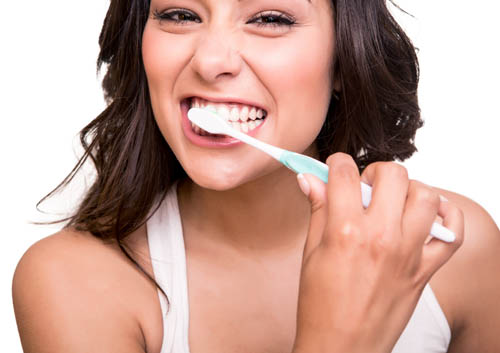
Brushing your teeth properly removes the food particles and bacteria that can lead to tooth decay and gum disease. However, you do not want to scrub your teeth or gums heavily. A heavy hand can lead to tooth and gum erosion, as Dr. Rick Johns and our staff see all too often.
You should also use a soft bristle toothbrush to avoid damaging the surface of your teeth. Make sure the head of the brush fits in your mouth, because if it is too large you will not be able to reach all tooth surfaces. Follow these steps to ensure you are brushing properly.
- Use a small amount of toothpaste on your brush. The recommendation is a pea-sized amount or thin strip on the bristles.
- Hold your toothbrush at a 45-degree angle to the surface of your teeth, angling towards your gums. Use a circular motion on all exterior tooth surfaces, and avoid back-and-forth “scrub” brushing.
- Once you have cleaned the outer surfaces, hold the brush vertically and clean the inner teeth surfaces — the side of your teeth that face your tongue. Do not forget the inner surfaces of your front teeth.
- Finally, finish by cleaning all the chewing surfaces of your teeth. You need to maintain a gentle touch, but make sure you get into the full depth of your molars. The entire process should take about two minutes.
Dr. Rick Johns and our staff recommend changing your toothbrush every three to four months for best results. Do not forget to clean your tongue, which helps remove excess bacteria from your mouth. Special brushes are available just for cleaning your tongue, and they are easy to use.
Proper care of your teeth also requires flossing on a regular basis. Flossing can be performed before or after you brush. Following up with a quality mouthwash will provide you with even more protection. Do not be afraid to ask the Rick Johns Dental team for tips on proper brushing and flossing.
Avoid the Emergency Room for Dental Problems
October 25th, 2023

There are certainly situations when going to an emergency room is the best response for your problem. A severe injury to your mouth, jaw, or face would qualify.
However, when it comes to long-term solutions for other dental problems, an emergency room visit may fall short. If you suffer from a major toothache, cavity, a broken tooth, crown, or veneer, it’s better to go straight to the dentist for treatment.
Dr. Rick Johns can provide you with a treatment plan that will be long lasting. When you visit an ER for a common dental problem, more likely you’ll only be given temporary relief for a serious and ongoing problem.
In many cases, the emergency room will give you pain medication to mask the symptoms until you can schedule an appointment at our Highland, IN office. That results in a lot of wasted time, as well as two separate medical bills. The ER may give you a temporary crown or filling, but you will still need a follow-up appointment for a permanent restoration.
We recommend you find the nearest emergency dental clinic, or even try a home remedy to relieve the pain until you can schedule an emergency appointment at Rick Johns Dental. A warm salt-water rinse or cold compress can be used to sooth tooth and gum pain in the meantime.
If you experience a dental emergency and are unsure about what to do, feel free to contact our Highland, IN office at any time. We will fit you into our schedule right away and figure out the best course of treatment for your problem.
Pregnancy: What should I know about my oral care?
October 25th, 2023

Dr. Rick Johns and our team at Rick Johns Dental know this is an exciting time as you anticipate the arrival of your new little one. We want to take this opportunity to provide you with some important information pertaining to your oral health during pregnancy. Just as the rest of your body is changing, the amount of bacteria in your mouth also changes. Scientists don’t understand all the reasons why, but during pregnancy, your mouth is more susceptible to bacterial complications that could result in increased risk for gingivitis or periodontal disease. What researchers do know is the change in hormones creates a more favorable environment for gum infections and diseases when you are pregnant.
You may experience an increase in gingivitis, even while continuing with regular daily brushing and flossing, and routine semi-annual month cleanings. You will likely complain of increased bleeding of the gums with routine daily care and more tenderness in the mouth. This is due, in part, to the increased blood flow and volume that naturally occurs with pregnancy. There is a greater amount of blood flowing through your veins, which translates into slightly engorged gum tissues. If gingivitis prevails, you may also experience pain and tenderness. We can help you navigate through your specific needs.
Brushing your teeth two times a day may not be quite enough. Similarly, if you only floss on occasion, consider making this activity a daily habit. Mouthwash is also advised, or sometimes a mild saltwater rinse may feel better than a commercial brand. Consider other products with xylitol and a WaterPik for additional cleaning.
Finally, we now know that bacteria in the mouth circulate throughout the body. These harmful bacteria compromise your immune system and may increase your risk for respiratory illness and cause other strains on your immune system. Remember that nutrients as well as pathogens are shared with your baby. If you feel tired or tempted to slack on your home-care routine, remember the importance and implications of your daily decisions on how your care for your oral health.
Contact our convenient Highland, IN location if you have more specific questions. We’re here to help you!
