






Cleaning Your Baby’s Teeth
March 8th, 2023

In the eyes of most parents, nothing is cuter than their baby’s smile. Did you know your little one’s smile (that is, his or her oral health) actually plays a huge role in determining the child’s overall well-being? In order to keep your youngster healthy and smiling, you need to know when and how to take care of those tiny teeth.
Baby teeth aren’t just temporaries that will fall out eventually. They help your baby chew and talk, and they reserve space in the jaw for permanent teeth later on. Since they’re so important, the right time to start dental care is only a few days after your infant is born.
Take a soft, wet washcloth or piece of gauze and gently wipe your baby’s gums. The earlier you begin, the more accustomed your child will become to a daily dental hygiene routine.
Babies that are put to bed with a bottle may be at greater risk for developing cavities. Milk, juice, and any other drinks that contain sugar instigate tooth decay while the child sleeps.
If your baby must go to bed with something, a bottle of water is the healthiest option. Remember to wipe your little one’s gums after each feeding, whether it’s formula from a bottle or breast milk.
As soon as your infant’s first tooth comes in, it’s time to start brushing! Twice a day, take a small amount of toothpaste (about the size of a grain of rice) and brush your son or daughter’s teeth gently in circular motions. As soon as your toddler has multiple teeth that touch one another, floss up and down the sides of the teeth to remove any plaque between them or below the gumline.
Babies’ teeth are prone to cavities and gingivitis, so you’ll want to be on the lookout for telltale signs. Check regularly for red, swollen gums, because this may be an indication of developing gum disease. Discoloration, white spots, or small pits in the teeth can signal a forming cavity.
As long as you follow these simple guidelines and schedule regular dental checkups with Dr. Rick Johns at our Highland, IN office, you can help to ensure your baby has a healthy mouth. There is nothing more rewarding than seeing your happy baby’s healthy smile.
I have fluoride toothpaste and fluoridated water; do I need a fluoride treatment?
March 1st, 2023

Fluoride is a naturally found ion with a history of greatly reducing the incidence of tooth decay in children. However, over the past decade, people have increasingly consumed bottled water, most of which does not contain fluoride, and children are no longer getting the recommended dosage of fluoride. In addition, many areas do not add the optimum amount of fluoride to the town drinking water.
Everyone’s dental needs are different. The amount of fluoride a person needs is determined by age (children), tooth sensitivity, risk for cavities, and medical conditions. When a patient needs additional fluoride it can be applied in a foam or varnish.
Children receive additional topical fluoride because teeth in the early development stages have a higher mineral uptake. The future strength of the enamel depends on this. When a tooth absorbs the fluoride ion, it creates hydroxyapatite, a harder mineral compound than enamel alone.
Those who have a dry mouth from medication also need extra fluoride. A daily fluoride rinse and a semi-annual fluoride varnish treatment are standard. If you are on medicine for high blood pressure, anxiety, diabetes, depression, or cholesterol, you may fit in this category.
Cancer treatments can also greatly impact your oral health. Fluoride varnish treatments prior to, during, and after radiation and chemotherapy can be beneficial. There are other mouth conditions which coincide with cancer treatments which make it difficult to brush and floss daily, and can contribute to an increased risk for decay. An infection during cancer treatment can be especially harmful, which is why preventive measures are important.
Fluoride treatments, administered topically, are highly beneficial in preventing decay. Feel free to call Rick Johns Dental to schedule an appointment or if you have any questions.
Eco-Friendly Toothbrushes
February 22nd, 2023
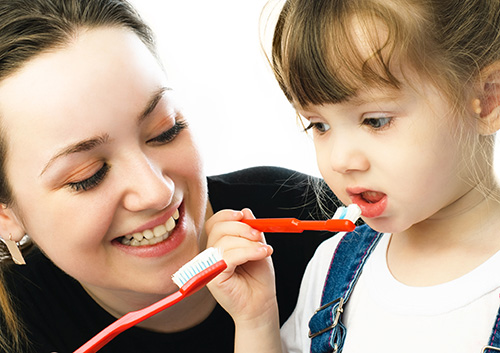
When it comes to dental hygiene, “going green” is not the first phrase that comes to mind. But if you are brushing properly, you are also replacing your toothbrush every three to four months as the bristles become frayed and wear down. Sure, that’s a tiny amount of plastic from each of us going to our landfills, yet it adds up to millions of brushes a year nationally. If you are concerned about reducing your carbon footprint while reducing your risk of cavities, there are several new toothbrushes designed to make brushing more eco-friendly.
Biodegradable Toothbrushes
Some brushes claim to be completely compostable. These models generally have heads fitted with boar bristles and handles manufactured from sustainable woods or bamboo. Boar bristles aren’t for everyone. Some users complain of the taste of the bristles, and boar bristles might be harsher than the soft bristles we recommend to protect both enamel and gums. There is also some concern about bacteria growth on organic bristles.
Earth-friendly Handles and Bristles
If you prefer the consistency and texture of regular synthetic bristles, you can still opt for a brush with a handle of sustainable wood or bamboo. You can also select PBA-free bristles, bristles made primarily of castor oil, or bristles that use natural ingredients in combination with synthetics.
Reduce, Reuse, Recycle
If these exotic brushes aren’t for you, there are more conventional choices that will save energy and cut down on waste.
- Reduce the amount of electricity you use for your electric toothbrush with a model that requires less charging time.
- Reuse your toothbrush by buying one with a handle made of metal, natural materials or plastic and replace the detachable head every three months.
- Recycled plastics can be found in the handles of some toothbrushes, and many brushes come in recyclable packaging. Every bit helps!
If you decide to use one of these green products, remember that your dental health is still the primary goal. Be sure the bristles of your brush are soft enough to protect your gums and enamel and can reach all the places you need to brush. The handle should be easy to grip and the head should be a comfortable fit for your mouth. It’s always best to choose products with a seal of acceptance from your local dental association, or talk to us about greener alternatives during your next visit to our Highland, IN office. Luckily, there are several workable options to protect the health of your family's teeth while still being mindful of the health of our planet.
Dental Anxiety
February 15th, 2023

If you suffer from dental anxiety, a visit to Rick Johns Dental might seem like a daunting prospect. Perhaps you had a bad experience in the past, but whatever the reason, please know that at our Highland, IN office, there is nothing to be afraid of. We understand you may be anxious about receiving dental treatments, and we’re here to help you have a comfortable, pain-free experience that will put your fears to rest.
You’re not alone!
A 1984 study that appeared in the Journal of the American Dental Association reported that up to 75% of all adults in the United States have some degree of dental anxiety. This includes five to ten percent whose dental anxiety is so severe that they try to avoid a dentist’s office at all costs.
Treatment
If you experience dental anxiety, it is important to let our office know in advance, so we can provide you with the dental care you need with an added touch of TLC. We can assist by explaining behavioral techniques for relaxation, by administering nitrous oxide (laughing gas), or by prescribing a relaxing medication prior to your dental procedure.
