






Improve your oral health with xylitol!
October 5th, 2022

Xylitol tastes sweet, but unlike sugar, it is not converted to acid that can cause your teeth to decay. It’s a naturally occurring sweetener found in plants, fruits, and vegetables; even the human body produces it in small amounts. Xylitol is widely used in sugar-free chewing gum, mints, candies, and even certain forms of medicine.
The World Health Organization has approved xylitol because only a small amount is needed for its health benefits. It’s even safe for diabetics, with a glycemic index of only seven. Xylitol has 40% fewer calories than other types of carbs: less than three calories per gram.
So how can this natural sweetener benefit your oral health? Take a look at the facts. Tooth decay starts when bacteria consumes the sugars left in your mouth. When you eat sugary foods, the bacteria on your teeth will multiply and make acid that can destroy your enamel.
Xylitol is derived from fibrous parts of plants, so it does not break down like a regular sugar. It actually helps maintain a neutral pH level in the mouth, which in turn prevents bacteria from sticking to the teeth. The bacteria are then unable to digest xylitol, which means your teeth won’t develop enamel damage and cavities.
Studies have shown the consumption of xylitol as a sugar substitute or a dietary addition had a dramatic reduction in new cavities and even reversed existing cavities. These effects are long lasting: low cavity rates remained years after the trials were done.
When there’s less bacteria and acid in your mouth due to xylitol, your teeth stay healthier. The more frequently it’s ingested, the more you will prevent enamel damage.
Aim to consume around five grams a day, or one gram every three hours if possible. You can do this by consuming gum, tablets, candy, or mints that have xylitol as one of the first ingredients after your meals. You can find these products in health food stores and specialty grocery stores.
Since xylitol replaces sugar on a one-to-one ratio, it’s used in several common items:
- Toothpaste
- Mouth rinse
- Baby oral wipes, gel, and pacifiers
- Nasal wash
- Dry mouth spray
- Granulated forms for cooking
- Granulated packets to add to drinks
- Commercially prepared foods
Make sure to pick up items that contain xylitol the next time you’re at the store! This is an easy way to maintain great oral health. If you have specific questions about xylitol, ask Dr. Rick Johns during your next appointment at our Highland, IN office.
Antibiotic Prophylaxis or Premedication
September 28th, 2022

In years past, it was often recommended that dental patients who had a history of heart problems or other conditions, such as joint implants, be given antibiotics before any dental work. This pre-treatment is called prophylaxis, based on the Greek words for “protecting beforehand.” Why would Dr. Rick Johns suggest this protection? It has to do with possible effects of oral bacteria on the rest of the body.
Our bodies are home to bacteria which are common in our mouths, but which can be dangerous elsewhere. If these oral bacteria get into the bloodstream, they can collect around the heart valve, the heart lining, or blood vessels. A rare, but often extremely serious, infection called infective endocarditis can result.
It is no longer recommended that every patient with a heart condition take antibiotics before dental procedures. Doctors worry about adverse effects from antibiotics or, more generally, that an overuse of antibiotics in the general population will lead to more strains of antibiotic-resistant bacteria.
There are some patients, however, who are at a higher risk of developing infective endocarditis, and who should always use preventative antibiotics. Generally, premedication is advised if you have one of these risk factors:
- A history of infective endocarditis
- Certain congenital heart conditions (heart conditions present since birth)
- An artificial heart valve
- A heart transplant
Your cardiologist will know if prophylaxis is advisable, and if you are taking any drugs which could interact with antibiotics. Always talk to your doctor about any dental procedures you are planning, particularly if they are invasive procedures such as gum surgery or extractions.
If you believe you would benefit from antibiotics before dental treatment at our Highland, IN office, the most important first step is to talk with your doctors. We are trained to know which pre-existing health conditions call for prophylaxis, which dental procedures require them, which antibiotics to use, and when to take them. Tell us about any health conditions you have, especially cardiac or vascular issues, and any medication allergies. Working with you and your doctor to protect your health is our first priority, and having a complete picture of your medical health will let us know if antibiotic prophylaxis is right for you.
My gums are shrinking!
September 21st, 2022
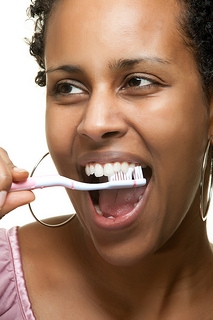
Have you ever looked in the mirror and noticed that your teeth looked longer? Does it seem like your gums are shrinking? This condition is called recession—many adults have it. Let’s look at some of the causes and what you can do about it.
During your exam at Rick Johns Dental, we will take measurements to check for periodontal disease. Dental professionals take recession measurements to see how much attached gingiva is present. This is the kind of tissue that is most resilient to infection.
The more recession, the less attached gingiva. The less attached gingiva, the less bone support. The less bone support, the higher your chances of tooth loss. It is quite a domino effect.
Don’t lose hope. The effect can be halted once you know the cause of your recession.
Do you ever wake up with your jaw clenched, and/or a headache that originates just above your ears? Clenching or grinding your teeth can cause recession. When there is added stress on a tooth, it flexes at the gum line.
Over time this causes microscopic breaks in the enamel and then a notch appears. The gum line is forced to move away from its original position. If this is something you see in your mouth, we can discuss the possibility of an occlusal guard at your next visit.
How do you brush your teeth? Do you brush in a straight line or circles? What kind of bristles do you use? Are the bristles on your toothbrush frayed?
When you brush in a circle, you are sweeping all along the gum line, removing the plaque from most angles. When you brush in a straight line, you may often miss the concave portion of the gums. This leaves plaque behind and leads to gingivitis. Whenever gingivitis occurs, the body attacks supporting structures like bone while trying to get rid of the infection. This is periodontal disease, which can cause recession.
Recession may also result from an irritant on the gums, such as a bar from a partial denture or orthodontic appliance (braces).
Gums do not “grow back.” The most common treatment for advanced recession is a tissue graft. There are many different kinds of tissue grafts.
Other factors can cause recession. If you think recession is happening in your mouth, schedule an appointment with Dr. Rick Johns to discuss your options, so you can make the appropriate treatment choice.
Mouthguard Q&A
September 14th, 2022
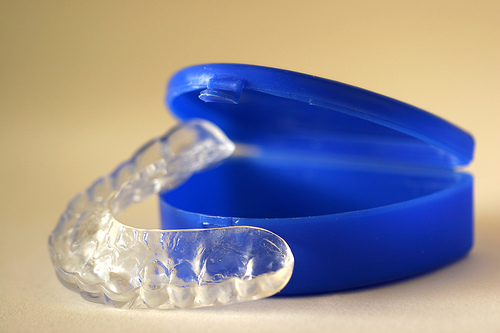
Today, Dr. Rick Johns and our team at Rick Johns Dental thought we would talk about mouthguards, what they are, where to get them, and when to use them.
Q: What is a mouthguard?
A: A mouthguard, which is made of soft plastic, is a flexible, removable device that fits in your mouth and is adapted to fit comfortably to the shape of your upper teeth. A mouthguard will protect not only the teeth, but also your jaws, lips, tongue, cheeks, and gums, and should be worn anytime you are participating in full-contact athletic or recreational activities that may result in injury.
Q: How do mouthguards work? Why are mouthguards important?
A: A mouthguard works as a shock absorber to cushion your mouth from the effects of a blow to the face, head, or neck. Mouthguards protect teeth from not only fractures, but also hold the tongue, lips, and cheeks away from the teeth to avoid lacerations. Using a mouthguard as instructed by Dr. Rick Johns can lessen the possibility of concussion and temporomandibular joint (TMJ) dislocation while you are out on the court or field. Increasingly, organized sports are requiring mouthguards to prevent injury to athletes, and research shows most mouth injuries occur when athletes are not wearing mouth protection.
Q: When should I wear a mouthguard?
A: Whenever you are participating in an activity that involves a risk of falling or head contact with other players. This includes football, baseball, basketball, soccer, hockey, and other competitive sports.
Q: How do I choose a mouthguard?
A: Dr. Rick Johns and our team encourage you to choose a mouthguard that you can wear comfortably. There are several options of mouthguards you may choose from. First, preformed or what we call “boil-to-fit” mouthguards are found in sports stores. But your best choice is asking us for one during your next visit as we can fabricate a custom mouthguard for you at our Highland, IN office. A custom mouthguard will be more comfortable to wear and more effective in preventing injuries.
If you have any additional questions about mouthguards, please give us a call or ask us during your next visit!
