






Dental Hygienist Appreciation Week
April 1st, 2026
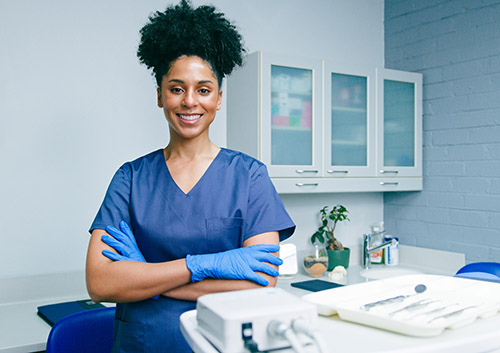
During the second week in April, we recognize and celebrate the expert care dental hygienists provide. Let’s take a moment this week to explore how the special skills of this valued member of your dental team in Highland, IN enrich your dental health.
Regular Cleanings
Dentists typically recommend routine dental examinations twice a year, and these visits will almost always include an in-office cleaning by your hygienist. Dental hygienists are highly trained healthcare professionals who are specialists in caring for your teeth and gums.
- Plaque and tartar need to be removed from tooth enamel to help prevent cavities and gum disease. While you can brush away plaque, it takes a dental professional to remove tartar, which is plaque which has mineralized over time. The hygienists who work with Dr. Rick Johns might use a hand scaler, an ultrasonic scaler, or both tools to gently scrape sticky plaque and hardened tartar from your tooth enamel.
- Your cleaning will also include polishing, where surface stains on the enamel are removed using a gentle abrasive. This cleaning might be done with a special toothpaste applied with a small rotating cup or with an air polisher, which removes stains with a stream of fine abrasive powder, water, and pressurized air.
- An expert flossing will remove any remaining plaque from between the teeth.
Deep Cleaning
Hygienists help prevent gum disease. Plaque and tartar on tooth surfaces below the gum line increase your risk of gum disease. Irritated gum tissue gradually pulls away from the teeth, creating pockets of bacteria and causing inflammation and infection.
- Your hygienist will use a probe to gently measure the depth of the space between the teeth and gums. Deeper than normal spaces or bleeding could be a sign of gum disease.
- Tartar on the tooth surface below the gum line will be removed using a treatment called scaling, a non-surgical procedure where your hygienist uses hand scalers or ultrasonic tools to carefully scrape hardened plaque from the tooth.
- Root planing might be done to smooth the root surfaces so that gum tissue can attach snugly around the teeth again, protecting the roots from plaque buildup and bacteria.
Preventative and Cosmetic Care
Some hygienists work with dentists to help provide additional diagnostic, preventative, and cosmetic services:
- X-rays and digital imaging.
- Oral cancer screenings.
- Sealants, thin plastic coatings which protect the top surfaces of molars—the most likely places to develop cavities—from accumulating food particles and plaque.
- Fluoride treatment, if recommended, applied in varnish, foam, or gel form.
- Professional whitening treatments.
Education
Finally, your dental hygienist is an educator!
- When it comes to brushing, there are effective techniques and . . . not so effective techniques. Your hygienist can teach you the best way to clean away food particles and plaque and the best tools for the job.
- During a cleaning, your hygienist will point out any spots where plaque has built up. Discovering the spots where you tend to leave plaque behind allows you to do a better, more thorough cleaning job at home.
- Flossing can be difficult for some of us because we have braces, or because of the way our teeth are aligned, or because of dexterity issues. Your hygienist can show you the best way to floss, as well as recommend products such as specially designed flosses or water flossers which will make flossing easier and more effective.
The dental hygienists at Rick Johns Dental are skilled professionals who work to create cleaner, brighter, healthier smiles for their patients every day. This week, we appreciate them for helping us achieve the beautiful smiles we get to appreciate all year long!
Whitening an Artificial Tooth
March 25th, 2026

It’s a bit of a contradiction: you are justifiably proud of your beautiful dental work, but you don’t want it to be obvious when you smile. Dental prosthetics such as veneers and crowns should blend perfectly with your natural teeth. If you have noticed your veneers are a different shade than your other teeth, or have a crown that is visibly darker than the teeth surrounding it, you are probably wondering if there is any way to lighten and whiten an artificial tooth surface. There is no one right answer, but let’s examine a few common scenarios to find the best solution for you.
If You Haven’t Started Your Dental Work and Want a Whiter Smile
If you are planning on getting a veneer or a crown, it’s best to take advantage of teeth whitening before you have the work done. Choosing a shade of bright white for your veneers and then trying to whiten your natural teeth to match it afterward is almost impossible. It’s a good idea to talk to us about whitening beforehand, and, if this is the best way to achieve the look you want, Dr. Rick Johns can match the color of your new prosthetic to your newly whitened smile. The goal is to make your new veneer or crown a perfect match to your natural teeth.
If You Have Existing Veneers, Crowns, or Other Artificial Surfaces
Porcelain veneers cannot be whitened, but the good news here is that they don’t stain the way natural teeth do. Unlike our teeth, porcelain is non-porous, so it is very difficult for typical culprits such as coffee, tea, or red wine to have as much effect. Any surface stains that appear can usually be gently removed with a professional cleaning and polishing, where we will take care not to scratch the delicate surface of the veneer. Porcelain crowns and implants, like veneers, can be brightened with a professional surface cleaning, but their original color cannot be changed.
Composite veneers and composites used in dental bonding are more porous and therefore more likely to stain. They are also immune to whitening, but might respond somewhat to a careful professional polishing at our Highland, IN office.
Finally, if the color of your existing dental prosthetics is a concern, replacement is an option we can consider together.
Whether you have existing veneers and crowns or are planning future dental work, please talk with us about achieving a seamless blend of old and new for a beautiful, natural smile. It’s a bit of a contradiction: the best work is the work no one notices!
Your Sunny Smile
March 18th, 2026

Your beaming smile makes a sunny day even brighter—and that sunny day can return the favor! How does the sun affect your dental health? Let’s shine some light on the subject.
You may have heard how important calcium is to your body. Over 99% of the calcium in our bodies is used to form teeth and bones, providing strength and structure to the hardest parts of the body. But that’s not the only task on the calcium to-do list. Calcium is also necessary for:
- muscles to work
- nerves to carry messages
- blood to deliver nutrients and oxygen
- the release of hormones
When we don’t get enough calcium in our diets, our bodies start to draw the calcium they need for these critical functions from our teeth and bones. Over time, a severe calcium deficiency can lead to teeth that are brittle, or more vulnerable to decay, or loose due to weakened bone density in the jaw.
We can get the calcium we need from a balanced diet. Dairy products are our most common source of calcium, and several servings of milk, cheese, or yogurt each day supply most of our needs. If dairy’s not on your menu, though, you can get calcium from other foods like broccoli, kale, collard greens, canned salmon, or sardines. Because calcium is so essential to our health, many foods are fortified with it, including fortified juices, bread, cereals—even tofu!
But there’s a snag here, and it’s a big one. We can’t really benefit from our careful consumption of calcium without the help of vitamin D. If calcium is the doorway to strong teeth and bones, vitamin D is the key that unlocks all of calcium’s benefits.
Without enough vitamin D, our bodies can’t absorb and make use of calcium. However, getting enough of this essential vitamin can be a problem. While we can get most of the vitamins we need from a balanced diet, there aren’t a lot of foods which are naturally rich in vitamin D.
So, how do we get this vital vitamin? The original option comes from nature.
- Sunlight
Vitamin D is called “the sunshine vitamin” because of the unique chemical reaction that creates it. When the ultraviolet B rays of the sun reach special cells in our skin, they convert cholesterol in these cells to a basic form of vitamin D. These vitamin molecules travel through the body, picking up hydrogen and oxygen molecules in the liver and kidneys to become active vitamin D.
Since sunlight exposure is easy, available, and free, it seems like a simple solution to getting the vitamin D we need.
But we’ve understandably moved away from the days of basking in the sun for hours at a time. Over-exposure to UV rays damages the skin, causing premature aging and, worse, a much greater risk of skin cancer. If you enjoy time in the sun, talk to your doctor about safe sun exposure, which can depend on the part of the country you live in, the time of year, and your individual skin type.
And, if you need to avoid sun exposure, there are other opportunities for getting the vitamin D you need.
- Diet
While there aren’t a lot of foods which are naturally rich in vitamin D, there are still a few options on the menu. Oily fish like salmon, tuna, and herring—and old-fashioned cod liver oil—are good sources of the vitamin. But most of us don’t live on a strict fish diet!
Instead, we can get the vitamin D we need from fortified foods. Vitamin D is commonly added to cow’s milk, soy milk, orange juice, and cereals to make sure the calcium in our diet is working effectively to keep our teeth and bones strong. Check out nutritional labels to discover whether your favorite grocery products contain vitamin D.
- Supplements
For hundreds of years, people who lived in climates and cities without a lot of sunshine suffered from the effects of vitamin D deficiency. Diseases like rickets, where the teeth and bones don’t form properly, were common in children. Adults who couldn’t absorb enough calcium suffered from weak teeth and bones.
Today, depending on age, allergies to sun or food products, dietary choices, and health conditions, some people are still at risk for vitamin D deficiency. If you’ve been diagnosed with this deficiency, your doctor might recommend a vitamin D supplement. (It’s important to take any supplement as directed, because taking too much vitamin D can be harmful, too.)
So, which form of vitamin D is best? Fortified foods? Supplements? Or is it that radiant original source—the sun? No need to worry. With any form of vitamin D, you’re getting the key you need to unlock the benefits of the calcium in your diet—benefits which make healthy teeth and bones possible.
If you have any concerns, talk to Dr. Rick Johns at our Highland, IN office about whether you’re getting the vitamin D you need. Your sunny smile will thank you!
Go Green for St. Patrick’s Day
March 11th, 2026

Millions of people, around Highland, IN and beyond, wear green on St. Patrick’s Day so they can show their spirit for the holiday and avoid getting pinched. While it may be easy for you to throw on a green shirt, sport a St. Patrick’s Day button, or wear a pair of emerald-hued shoes, if you’re an avid St. Patty’s Day enthusiast you may want to try something different this year. Dr. Rick Johns thought of a few ideas that will help you take your holiday spirit to the next level:
Visit Chicago’s Green River
If you happen to be near the Windy City during St. Patrick’s Day or you’re thinking of planning a trip, don’t miss out on going downtown to watch the large-scale celebration that kicks off when the city dyes the river bright green. According to the Chicago Sun-Times, Chicago has been celebrating the holiday with this tradition for more than 50 years, with tens of thousands of people gathering annually to witness the mysterious dying process and the stunning result.
Don Green Face Paint
Just like an avid sports fan on game day, you can use green face paints to showcase your enthusiasm for this holiday. Avoid breakouts or allergic reactions by only using paints that are specifically meant to be applied to the skin. A little bit of face paint can cover a large area, so feel free to get creative and decorate the whole family on St. Patrick’s Day.
Eat Green All Day
Not a fan of green eggs and ham? With the increasing popularity of green smoothies, there’s no better time to get in on this health craze. To create a green smoothie without the aid of food coloring, you can simply blend a generous amount of a leafy green vegetable, such as spinach or kale, with the ingredients that you would typically use to make a smoothie, like fruit, ice, milk, or juice. Keep the trend going throughout the day by using those same vegetables to create a green soup, egg salad, or a batch of bright green pastries. As an added bonus, you’ll get a healthy dose of vitamins without changing the taste of most of these foods.
If your old holiday routine has gotten stale, leave your green T-shirt in the drawer and try one or all of these tips. Don’t be surprised if you have so much fun that you decide to start a new, annual St. Patrick’s Day tradition! Have a happy St. Paddy’s day from Rick Johns Dental!