






March is National Nutrition Month!
March 2nd, 2022

While you don’t have to wait to start eating right, March is the month the Academy of Nutrition and Dietetics asks everyone to pay special attention to what goes into our bodies. The Academy has designated the month of March for focusing the public’s awareness on what they eat.
What Not to Eat
The academy points out that the foods you eat have a direct effect on the health of your teeth and specifically on tooth decay. Bacteria rely on carbohydrates to thrive. That is why Dr. Rick Johns and our team at Rick Johns Dental tell our patients to cut back on both candy and sweets. They consist of simple sugars that feed the bacteria in your mouth and enhance tooth decay.
It’s the hidden sugars that will cost you, though. Get in the habit of reading labels on food and looking for products with added sugar. This includes ingredients that end with the suffix “ose.” When it comes to nutrition, these foods offer little value beyond satisfying that sweet tooth.
What You Should Eat
Turn to foods that not only taste good but are good for your teeth too. Dairy products, for example, provide the body with nutritional items that support tooth enamel. Foods high in protein feature phosphorus, a nutrient critical to oral health.
You can’t really go wrong by adding color to your diet, either. Fruits and vegetables make for a colorful plate and a healthy meal. Use some caution with acidic fruits like oranges or even tomatoes, because the acid can erode tooth enamel. It is better to include these foods in a meal instead of eating them by themselves.
Remember, good nutrition is something you should worry about all year long, not just when celebrating National Nutrition Month. March just serves as a fun reminder that eating right is a proactive step in managing your dental health.
We encourage you to give us a call at our Highland, IN office to learn more!
Flossing Fixes
February 16th, 2022
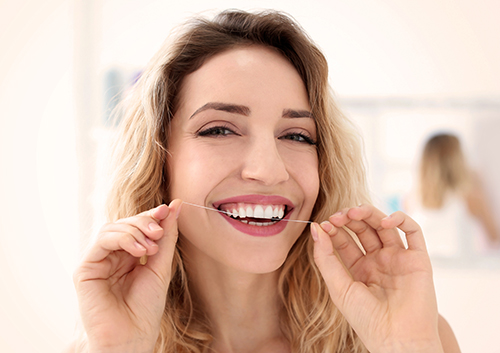
A length of floss plus your teeth is about as low-tech as it gets. But, as with so many other “simple” skills, it helps to learn just the right technique to avoid common mistakes and to make your flossing as effective as it can possibly be.
- Choose the Right Floss for You
You’re getting ready to go out, and your floss keeps getting stuck, shredding, or snagging. You might try waxed flosses or flosses treated to glide easily through the teeth if this is a difficulty. (But do call us if it happens a lot—it could be a problem with a restoration, or a cavity, or some other condition we should address.) If you have the opposite problem, too wide a space between teeth for effective flossing, there are dental tape flosses that work with wider spacings. Braces? There are even specially designed dental flosses that thread between brackets and wires to access hard-to-reach plaque and food particles. If you’re unsure which product will work best for you, we have recommendations.
- Don’t Be Too Hard on Yourself
Did you know dental floss is a handy kitchen tool? You can use (unflavored) floss to cut cakes into even layers, slice cheese, or divide a log of cookie dough into perfect rounds. Just pull the floss taut and saw away. But let’s not use this technique on delicate gum tissue! Gums can be injured by a vigorous, sawing motion. Instead, gently guide the floss between the teeth to the gums, and, when you reach the gum line, gently ease the floss up and down the tooth surface. But do remember, sometimes the gums are sore and sensitive because of too little flossing, not too much. Proper cleaning will help keep your gums both healthy and pain-free.
- Technique Counts!
We often use floss to remove food particles from between the teeth, which provides instant dental gratification. But you are flossing for the long term as well. Proper flossing removes the plaque that leads to cavities from places your brush just can’t reach. Make sure you floss between each tooth, and don’t forget the back of those teeth on the end. The next time you visit our Highland, IN office for a cleaning, let us demonstrate the most effective techniques for gently removing plaque from beneath the gum area and on the tooth’s surface.
- It’s All in the Timing
How much time should you spend flossing? That answer will depend on your individual needs. For some people, thorough and careful flossing once a day will be sufficient. For others, flossing more often might be advisable. We can help you decide how often and how long to floss.
It might take some time and practice to learn to floss effectively, but you will find your technique gets better and your flossing is accomplished more quickly once you have the basics down. If Dr. Rick Johns can offer any suggestions, don’t hesitate to ask!
Choose Chocolate on Valentine's Day
February 9th, 2022

From a student handing out sweets for her classmates to an older married couple exchanging boxes of candy, Valentine’s Day is the time of year when people like to show affection by gifting sugary treats to their loved ones. Whether you’re on the giving or receiving end of Valentine’s Day candy, you can celebrate the holiday in a healthier way by making dark chocolate your confection of choice.
Contribute to Your Health
According to the Cleveland Clinic, studies have shown that the cocoa beans used to make chocolate contain flavonoids, which can help protect the body against damage from various toxins. Flavonoids may also help lower blood pressure and improve blood flow to the heart and the brain. Dark chocolates typically contain a higher amount of flavonoids than other types, making them a great choice for chocolate lovers. However, you should keep in mind that many companies produce chocolate that is so heavily processed that the flavonoids are largely eliminated. Your best bet is to look for high-quality dark chocolates and cocoa powders that have undergone minimal processing.
Protect Against Cavities
If you think there’s no way candy could ever be beneficial for your teeth, think again. The Texas A&M Health Science Center has reported that the tannins present in cocoa beans may actually help prevent cavities by interfering with bacteria’s harmful interaction with teeth. Just like with flavonoids, tannins have been found to be present more often in dark chocolates, rather than milk chocolates, giving you another great reason to choose the richer, sweet varieties.
Avoid a Sticky Situation
One more benefit of choosing chocolate over other candies is that it is less likely to get stuck in the crevices and spaces between teeth. Gooey sweets like taffy can stay lodged in the mouth for longer periods of time, putting you at a greater risk for developing cavities. When you choose your chocolate, be sure to avoid types that also contain sticky ingredients like caramel or marshmallow, and instead opt for the plain varieties.
Remember that the health benefits you can receive from dark chocolate are largely based on eating the candy in moderation. With that being said, it’s easy to make this delicious and health conscious switch when you’re out shopping for your sweetheart, friends, loved ones, and yourself. Have fun satisfying your sweet tooth this year and Happy Valentine’s Day from all of us at Rick Johns Dental!
Mouthguard Protection
February 2nd, 2022

Let’s talk about mouthguards and night guards—two crucial appliances that protect your teeth and jaw.
We could talk about how important a mouthguard is when you lead an active life. Mouthguards protect teeth, delicate mouth tissue, and jaws from accidents and impacts.
Or if you grind your teeth at night, waking up every morning with tooth or jaw pain, we can talk about how a night guard can be a quality-of-life-saver.
But we’re not going to talk about any of these important topics today. Instead of looking at how your mouthguard protects you, today we’re going to look at how you can protect your mouthguard.
If you want your guard to last longer, work better, and stay (and smell) cleaner, some basic tips make all the difference.
- Keep your guard clean.
This can’t be stressed enough. Without a good cleaning routine, your guard can become discolored, develop an unpleasant odor, and even cause illness. Not very appealing, right? Happily, keeping mouthguards and night guards clean isn’t difficult.
When you wear your guard, whether during daytime activities or through the night, the same plaque that is present in your mouth makes itself at home in your appliance. And when your guard is in its case, that dark, moist environment makes it a perfect breeding ground for all kinds of bacteria, viruses, and fungi.
As soon as you take your guard out, rinse it off. Brush with a soft toothbrush to remove all the plaque, saliva, or food debris that might be lingering in your appliance. (If you are on the playing field, in the park, or at some other inconvenient location, rinse it and brush as soon as you can.) Toothpaste can help get your guard its cleanest, but can be too abrasive for some appliances.
Once you’ve cleaned it, let your guard air dry in a clean spot for about 30 minutes. Air drying helps prevent bacterial growth. After your guard has dried, return it to its case.
Once a week, you might need to give your guard a good soak in a mouthwash or other dental cleaning solution.
Since cleaning instructions can be different depending on which type of guard you have, be sure to follow our instructions if you have a custom guard, or follow the manufacturer’s cleaning instructions if you have a store guard.
- Keep it safe.
When your guard isn’t in your mouth, it should be in its case. Lying loose on the bathroom counter or tumbling around in your gym bag puts your guard at risk for breakage and bacteria.
And don’t forget to clean your case thoroughly every few days and air dry it as well. Bacteria, viruses, fungi, mold, and other unwelcome guests can collect in your case, too.
- Keep it only as long as it’s in good condition.
You can purchase mouthguards from sporting or drug stores, or Dr. Rick Johns can make you a mouthguard or night guard designed to fit your teeth perfectly. These appliances are made to be strong and durable, but they’re not indestructible. Over time they can wear down or become damaged, especially if you treat them carelessly.
Bacteria can lurk in dents and cracks, and you can cut your mouth on rough, sharp, or broken edges. But if your guard isn’t fitting properly, don’t resort to self-help! Trying to repair, reshape, or trim your appliance yourself is not a good idea, because it might affect its fit and protective ability.
Any sign that your guard isn’t fitting properly or shows signs of wear and tear could mean it’s time for a replacement. You can replace a store model, or ask our Highland, IN team about repairing or replacing your custom guard. A mouthguard or night guard that doesn’t fit, doesn’t protect you.
Take care of your guard, and it will take care of you. The reward for the small amount of time and effort you put into caring for your mouthguard or night guard is a smile that will last you for a lifetime. That’s a benefit we can talk about all day!
