






Summer Dental Health? Get into the Swim of It!
July 7th, 2021
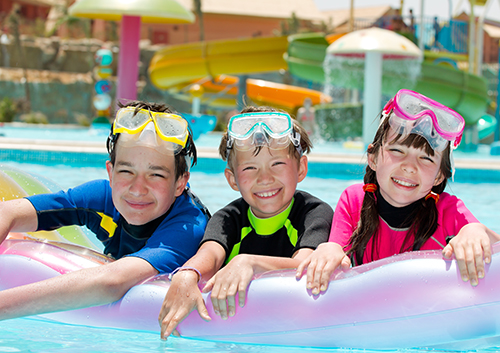
On a sizzling hot day, there’s not much that makes us happier than heading to the water for a quick swim, some gentle laps, or even a rousing game of water polo. And this being a sizzling hot dental blog, we are happy to offer some tips on how to make your summer swim good for your dental health as well as your mental health!
- Mouthguards
You might use your mouthguard all the time—for biking, or basketball, or skiing. But in the pool? Absolutely! Anyone who has played water polo knows what a physical workout it is. Elbows! Hard tosses! Collisions! And it’s not just pool sports. Water-skiing on the lake, surfing in the ocean—anywhere humans and solid objects are involved, tooth and jaw injuries are possible. Don’t spend valuable summer hours tending to a cracked or broken tooth as a result of sports accidents.
And, unlikely though it seems, even hanging by the pool can be hazardous to your smile. Hard concrete edges wait to greet surfacing divers. Slippery cement and tiles surrounding the pool are the downfall of many a swimmer running to jump back into the water. Be aware of possible dental dangers, and use a mouthguard as a great proactive way to avoid them.
- Swimming Pools & Chlorine
Ah, the smell of chlorine! We all want to know that swimming pools are as clean as they can be, and one method of keeping them that way is with the addition of antimicrobials to the water. But too much exposure to chemicals can cause enamel erosion, or even a condition called “swimmer’s calculus.” Swimmer’s calculus is recognized by a hard, brownish, tartar deposit that appears on the front teeth of swimmers who spent a lot of hours in the pool. It’s a cosmetic problem, but one that’s difficult to get rid of without a professional cleaning. If you’re a competitive swimmer, or simply someone who spends many hours a week in treated water, give us a call if you notice hard-to-remove discoloration or tooth sensitivity.
- Retainers
Different people have different opinions on whether or not your retainer should be exposed to the chlorine in pool water. (Or the salt in saltwater or the bacteria in lake water.) Ask us for ours! But you’re best off leaving it in your bag or locker, anyway, because retainers can be easily lost in the water. They might be able to survive a swimming pool, but a lake or ocean rescue is very unlikely. Just remember to put your retainer in a case, in a safe spot, and replace it when you’re out of the water for the day.
Enjoy your time on the water, and don’t forget to schedule an exam with Dr. Rick Johns and a professional cleaning if you haven’t been in the office for a while. If you do have a dental problem or an accident, give our Highland, IN office a call immediately. We want to make sure you dive in to summer fun with a healthy, beautiful smile!
Fun Facts for the Fourth
July 1st, 2021
The Fourth of July is a great time to get together with friends and family members for BBQ, games, fireworks, and other celebrations in honor of our country’s independence. While your fellow revelers eat hot dogs and wave flags, you can impress them by sharing these fascinating facts and historical tidbits about some of our country’s traditions and symbols from the team at Rick Johns Dental.
The Statue of Liberty
With a torch in one hand and a tablet in the other, the Statue of Liberty is one of the most iconic and recognizable symbols of our country. However, as recognizable as certain parts of the statue are, not many people know that broken shackles, which represent oppression and tyranny, are lying at Lady Liberty’s feet. According to the Statue of Liberty-Ellis Island Foundation, the copper-plated lady weighs in at a whopping 450,000 tons and has been holding her torch up for more than 125 years, which must make for some impressive arm muscles.
Nathan’s Hot Dog Eating Contest
Since 1916, people have been flocking to Coney Island on the Fourth of July to witness what some people call the “superbowl of competitive eating.” Nathan’s Hot Dog Eating contest challenges competitors to devour as many hot dogs as they can in just ten minutes, with the current record holder swallowing a whopping 68 hot dogs! If you’d like to witness this bizarre and frenzied eating competition but you won’t be anywhere near Coney Island on the fourth, don’t worry. ESPN has been broadcasting this popular event for several years, so you can watch from the comfort of your couch while you eat a reasonably portioned meal.
The History Behind Fireworks
Viewing the nighttime fireworks display is exciting way to finish off the fourth. Many people know that these brilliant displays probably originated with the Chinese. However, many historians also believe that fireworks were stumbled upon when the Chinese roasted bamboo sticks over fires and watched them explode. After many years of roasting the sticks, a group of alchemists created an early form of gunpowder, which they stuffed into the bamboo sticks to create an even more powerful explosion, paving the way for the today’s modern fireworks.
Whether you’re planning on visiting the Statue of Liberty, watching fireworks in Highland, IN, or even participating in a hot dog eating contest, Dr. Rick Johns and our team hope you have a safe and fun-filled holiday. Happy Fourth of July!
Why Are My Child’s Baby Teeth So White?
June 23rd, 2021

One of the most charming aspects of your baby’s beautiful smile is his brilliantly white teeth. But now that his adult teeth are coming in, the difference in color is very noticeable. Is this something to be concerned about? Happily, probably not.
Both baby teeth and adult teeth have the same basic structure. The inside of the tooth, the pulp, contains blood vessels and nerves. The pulp is covered by a layer of dentin, a hard, yellowish substance composed of living tissue that helps protect the pulp and transmits signals for pain, pressure, and temperature. Enamel is the outer protective covering of the tooth, and its natural color can vary from greyish-white to light yellow.
If primary and permanent teeth are so alike, how can they look so different? As with so many things, the difference lies in the details. In adult teeth, enamel is semi-translucent, so it will allow the color of what is beneath it to show through. And the color of the thick dentin beneath is naturally yellow. Baby teeth have a thinner layer of the yellowish dentin. And while their enamel is also thinner, the enamel in baby teeth is generally whiter and more opaque, so less of the underlying yellow from the dentin is visible.
The result of these small differences is that adult teeth are normally darker than baby teeth to begin with. And when a permanent tooth that is just a bit darker erupts next to a bright white baby tooth, it is going to look even more yellow than it actually is. Once all of the baby teeth in front have been replaced with adult teeth, you will have a much better idea of their real color without unflattering comparisons!
There are times when concerns about tooth color should be looked at by Dr. Rick Johns more closely.
- Unusual discoloration in teeth should be examined. Some discoloration is caused by medical conditions such as hypomineralization, some by environmental factors such as excess fluoride, some by trauma, some by medication. If you notice a discolored section of your child’s tooth, or the tooth has turned a different shade from the teeth around it, give us a call.
- Your child might have naturally whiter or yellower teeth simply as a matter of genetics. If your child is self-conscious about the color of his teeth, we can talk about whitening solutions when he is old enough to use them safely. Home whitening products should never be used on young children.
Give yourself time to adjust to your child’s new, adult smile. You will probably notice no difference at all once all of his permanent teeth come in. And keep those new teeth their brightest with consistent brushing and flossing, and regular checkups and cleanings at our Highland, IN office. This is the simplest prescription for a charming, white, and healthy smile at any age.
I don't brush while I'm at work. Should I?
June 16th, 2021
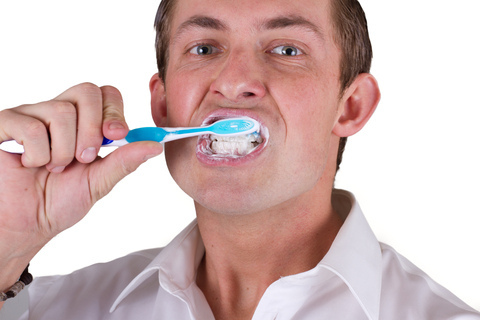
Yes, absolutely. A recent survey by Oral-B® reveals that despite knowing that a healthy, good-looking smile affects not only their personal wellness but their professional image as well, very few people (only 14 percent) brush and floss at the office regularly. What’s more, three quarters of people who responded to the survey said they ate twice or more a day at work.
Today, Dr. Rick Johns and our team thought we would provide some tips for brushing at work.
- Leave a toothbrush at work to increase your likelihood of brushing
- Brush your teeth twice a day with fluoride toothpaste. Replace your toothbrush every three or four months, or sooner if the bristles are frayed. A worn toothbrush won’t do a good job of cleaning your teeth.
- Clean between teeth daily with floss or an interdental cleaner; this helps remove plaque and food particles from between the teeth and under the gum line. Tooth decay-causing bacteria still linger between teeth where your toothbrush bristles can’t reach.
And remember to brush for 30 to 45 seconds across visible parts of the teeth. Brushing after breakfast or lunch will eliminate any remaining food particles and odors. We recommend people brush their teeth twice and floss once a day to remove plaque and other harmful bacteria.
To schedule your next appointment with Dr. Rick Johns at our Highland, IN office, please give us a call!
