






February Is Children’s Dental Health Month
February 4th, 2026

It’s the littlest month of the year, so what better time to think about the dental health of our littlest family members? February is National Children’s Dental Health Month, and we’re here to suggest some of the best dental habits for healthy childhood smiles.
Babies
- Even before your baby cuts her first adorable tooth, you can start proactive dental care by gently wiping little gums with a clean, moist gauze pad or soft cloth twice a day. This removes bacteria and food particles and helps prepare your baby for brushing.
- When that first tooth does appear, or by age one if it hasn’t yet erupted, it’s time to schedule a visit to the dentist. At this first visit, your child’s dentist will check jaw and tooth development and can give expert guidance on teething, brushing, how much and which kind of toothpaste to use, and topics like thumb-sucking and pacifier use.
- When baby teeth arrive, use a small soft-bristled toothbrush designed to fit comfortably in tiny mouths.
- Use toothpaste as recommended. Children under the age of three who use paste should use a very small amount, no larger than a grain of rice.
- Prevent “baby bottle tooth decay”—don’t put your baby to bed with a bottle. This allows the sugars in formula or, when your child is 12 months or older, milk, to bathe the teeth throughout the night. And babies and toddlers never need sugary juices or sodas in those bottles!
Toddlers
- Help your child develop a positive relationship with his dental team. Read books or watch videos to help your child learn what to expect. Practice with him by having him open his mouth while you count his teeth. Plan visits when your child isn’t hungry or tired. Be positive yourself—your child will take his cues from you!
- Schedule regular appointments for exams and cleanings. Dr. Rick Johns will check tooth and jaw development, look for any signs of decay, and evaluate potential problems such as prolonged thumb sucking or pacifier use.
- By age three, children have most or all of their baby teeth. Use a soft bristled brush to clean your child’s teeth twice each day. As she grows, demonstrate how to brush properly. The dental team at Rick Johns Dental will have some great ideas on technique!
- Daily flossing should begin as soon as your child has two teeth which touch.
- Around age six, your child may be transitioning to solo brushing and flossing—but your oversight is still needed. Make sure all the surfaces of the teeth, including the tops of new molars, are brushed thoroughly. You might provide a timer or a two-minute song or video to make sure your child spends enough time brushing. Flossing can be tricky for young hands, so you’ll need to help with that task for a few years more.
School-Aged Children
- Dentists and orthodontists recommend a first visit to the orthodontist by age seven, or earlier if you notice your child has trouble chewing or biting, if the teeth don’t seem to fit together properly, or if you have any concerns about bite and alignment. When potential problems are discovered right away, early intervention can prevent more serious orthodontic issues from developing later. The team at Rick Johns Dental in Highland, IN is happy to answer any questions you might have about early interventions!
- Talk to Dr. Rick Johns about sealants. Permanent molars usually erupt between the ages of 6 and 12. Sealants are thin coatings which protect the chewing surfaces of these molars from food particles and cavity-causing bacteria which would otherwise collect inside grooves in the enamel.
- Children who play sports and engage in activities with a chance of physical contact should have a well-fitted mouthguard to protect their teeth. Be ready to replace it as often as recommended by Dr. Rick Johns or if it’s damaged.
- Increases in hormones during puberty can lead to puberty gingivitis, and swollen, red, and bleeding gums can be the result. Proactive dental hygiene will prevent gum disease from developing. Make sure your child brushes two minutes, twice a day, and flosses once per day. If symptoms persist, it’s time to see the dentist.
- If your child is beginning orthodontic treatment, you can help make the journey easier. Keep up with appointments and adjustments, look for toothbrushes and floss designed for braces, and provide braces-friendly foods. If your child wears bands or aligners, you may need to remind her to wear them for the recommended number of hours each day.
- A nutritious diet is essential for healthy teeth and gums. Give your child solid nutritional building blocks with a diet rich in proteins, vitamins, and minerals.
Help your child enjoy a future of healthy, confident smiles by working in partnership with your child’s dental team. They are ready every month of the year with advice and expertise to make that healthy dental future a reality!
Electric or Manual Toothbrush: Why It Does (and Doesn't) Matter
January 28th, 2026
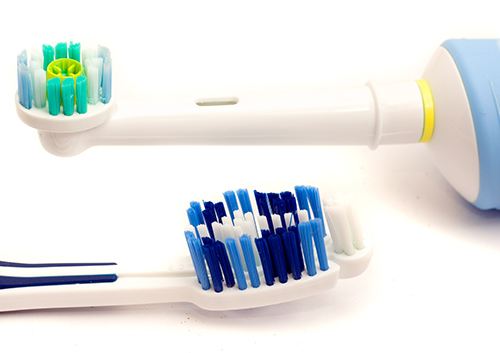
You live in the golden age of toothbrushes. Until a few decades people used twigs or brushes made from animal hair to clean their teeth: not very soft and none too effective.
Now, you have a choice of manual brushes with soft, medium, or hard bristles. Or you might choose to go with an electric toothbrush instead.
Have you ever wondered whether manual or electric brushes provide better cleaning? Actually, they both do the job. The key is to brush and floss every day, regardless of the kind of brush you prefer.
At our Highland, IN office, we like to say the best brush is the one you'll use. So if you prefer manual, go for it. If you prefer electric, turn it on.
Both types have their advantages but both types will get the job done as far as removing plaque.
Electric Toothbrushes
- Provide power rotation that helps loosen plaque
- Are great for people with limited dexterity due to arthritis or other problems
- Are popular with kids who think the electric brushes are more fun to use
- Can come with variable speeds to help reduce pressure on sensitive teeth and gums
Manual Toothbrushes
- Can help brushers feel they have more control over the brushing process
- Allow brushers to respond to twinges and reduce the pressure applied to sensitive teeth and gums
- Are more convenient for packing when traveling
- Manual brushes are cheaper and easier to replace than the electric versions.
In many ways, the golden age is just beginning. There are already phone apps available to remind you to brush and floss. New apps can play two minutes worth of music while you brush, help you compare the brightness of your smile or help explain dental procedures. Maybe someday we’ll even have programs that examine your teeth after brushing and identify spots you might have missed.
Bright Ideas for Your Smile
January 21st, 2026

Keeping your smile its brightest can be a challenge! The foods you eat, healthy habits, unhealthy habits, and time itself can affect the color of your enamel. Luckily, there are some everyday actions you can take to minimize staining and discoloration.
- Limit “Food Coloring”
Some of our favorite foods and beverages cause some of the most noticeable staining. Even though enamel is the strongest substance in our bodies, it’s still porous. This means that enamel can absorb elements from our foods, including tannins and natural food colors, which darken teeth over time.
That’s why a daily cup of coffee or tea, or a glass of red wine with dinner, or frequent helpings of dark berries, can lead to a less than brilliant smile in a matter of months. What’s more, acidic foods like citrus fruits, pickled foods, and sodas erode the enamel surface, which makes it easier for food stains to penetrate.
When you eat those smile-dimming foods, it’s a good idea to rinse with water right away. (When tasty treats are acidic, it’s best to wait to brush for about half an hour to avoid enamel damage.) And here’s a simple work-around—use a straw when you enjoy discoloring drinks.
You can also reduce staining by adding food allies to your diet. Besides bringing you the nutritional benefits of a healthy, well-balanced diet, crunchy foods such as apples, carrots, and celery can have a mild scrubbing effect on the tooth surface, and dairy foods strengthen enamel and might help prevent staining when added to coffee or tea.
If you’re mindful of your eating habits, you’ll help your smile stay its brightest. And speaking of habits . . .
- Keep Up with Healthy Habits
Plaque is a sticky biofilm which contains oral bacteria, food particles, saliva, and fluids. This film starts forming within hours after brushing, and a buildup of plaque leaves teeth looking yellowish. If plaque is left undisturbed, it hardens into tartar within days. And the yellow and brown colors of tartar aren’t a flattering look for any of us.
Regular brushing and flossing is the best way to keep your teeth plaque-free. For a brighter smile, a whitening toothpaste can help remove superficial surface stains. But what a whitening toothpaste can’t do is to remove deep staining or tartar.
A professional cleaning every time you have a checkup at our Highland, IN office is the best way to keep your teeth their cleanest, especially because tartar must be removed by a dental professional. And please feel free to ask for brushing and flossing tips to help maintain your sparkling smile.
- Give Up Unhealthy Habits
Cigarettes, cigars, and other forms of tobacco are terrible for your health and terrible for your smile. While cosmetic concerns are the least of our worries when it comes to tobacco, it’s well known that smoking and chewing tobacco cause unattractive yellow and brown staining.
Quitting tobacco in any form benefits not just your appearance, but your oral health—and your overall health. When you’re ready, talk to Dr. Rick Johns about some of the methods you can use to give up the habit permanently.
- Beat the Clock
Over the years, erosion and wear cause the enamel layer on the outside of the tooth to thin or crack. This allows the dentin underneath to show through. Because dentin is darker than enamel to begin with, and gets darker over time, teeth can take on a yellow or grey hue as we age.
Keep your smile looking its best through the years with regular checkups and cleanings. Avoid excessive erosion and abrasion by being mindful of the acidic foods in your diet, using a soft-bristled brush for cleaning your teeth, and getting treatment for harmful conditions like bruxism (tooth grinding). If you notice any changes in your smile, it’s a good idea to talk to Dr. Rick Johns.
While preventing staining naturally with diet and healthy habits is great, sometimes nature needs a nudge. If you have an important event coming up, or if you would simply like to feel more confident about your smile, talk to us about professional whitening. A professional treatment uses a stronger whitening formula, and often works more quickly, is more effective at removing yellowing and stains, and lasts longer than home treatments.
Finally, while you can do a lot to keep your teeth their brightest by preventing and treating external staining, other types of discoloration can also affect your teeth. For staining caused by medication, root canal work, or trauma, ask us about all the options available to you.
Yes, keeping your teeth their brightest can be a challenge, but doing your part—and working with your dental team at Rick Johns Dental—will make sure you greet the world with a sparkling, confident smile.
Canker sores, cold sores, and mouth sores: What's the difference?
January 14th, 2026

At Rick Johns Dental, we know many people have experienced some form of mouth sores or irritation. Some mouth sores are harmless and go away on their own after a few days, while others are more serious and should not be ignored. Mouth sores occur for many different reasons, but bacterial infections, viruses, or funguses often trigger them. The best way to tell the difference between a canker sore and a cold sore is that canker sores occur inside the mouth while cold sores occur on the outside the mouth.
The most common mouth sores are:
Canker sores: A non-contagious, small, grayish ulcer with a red border, canker sores appear inside the mouth. While outside factors such as stress, fatigue, or allergies may increase the chances of developing a canker sore, most health experts believe they stem from bacteria or a virus that attacks the immune system. Canker sores typically heal within a week or two.
Cold sores: Also called fever blisters, cold sores are contagious groups of fluid-filled blisters that often erupt around the lips and sometimes under the nose or around the chin. Cold sores are the result of the herpes simplex virus, and once infected, the virus remains in the person’s blood stream.
Leukoplakia: A potential warning sign of oral cancer, leukoplakia is a premalignant lesion that appears as a white patch on the inside of the mouth, tongue, or gums. The lesions, which are caused by excessive cell growth, usually afflict those who smoke tobacco. Dr. Rick Johns may choose to have the lesion biopsied if the outbreak appears severe.
Oral candidiasis: Also called oral thrush or moniliasis, this condition is caused by the overgrowth of a type of yeast called candida. Common symptoms of oral candidiasis include white spots inside the mouth and on the tongue, redness or discomfort in the mouth area, sore throat,difficulty swallowing, and cracking at the corners of the mouth. It is important to visit Dr. Rick Johns if you have oral candidiasis. If left untreated, it may infect your bloodstream, which can be very dangerous. Healthy adults do not usually get thrush, and the condition is most often seen in infants, the elderly, patients undergoing chemotherapy, or people with AIDS or other diseases that are known to weaken the immune system.
Should you have a mouth sore that lasts a week or longer, we encourage you to give us a call and schedule an examination at our Highland, IN office.