






Quit Smoking to Save Your Smile
September 16th, 2020

You have probably counted a hundred reasons to stop smoking. It’s unhealthy. It’s expensive. It annoys the people around you. You have to schedule your day around the next cigarette. But here’s reason number 101: Did you know that one of the many side effects of smoking is the damage it does to your smile?
Your Appearance
One of the most obvious results of smoking is the constant yellowing and discoloration of your teeth. Tobacco stains can take longer to remove with home brushing and whitening. And, while a professional cleaning and whitening will make a world of difference, all that good work is undone once you start smoking again.
More important, no smile looks its best with periodontal disease and tooth loss. Smoking has been linked to the presence of more harmful oral bacteria and higher occurrences of cavities and gingivitis (early gum disease). Periodontitis, or severe gum disease, is much more common among smokers. Tooth loss is also much more likely.
Healing after Dental Surgery
Smoking slows the healing process. It has been linked to a weaker immune system, so it’s harder to fight off an infection or to heal from one. And because of the harmful effect of smoking on bone tissue, there is a higher failure rate for dental implants among smokers. Bone density can be so compromised that an implant is not even an option.
Healing after Extractions
If you have a tooth extracted, the formation of a blood clot at the site of the removal is essential to avoid a condition called dry socket. Dry socket can lead to pain, serious infection, and other complications. Luckily, this clot is resilient and pretty hard to dislodge—unless you apply suction such as sipping through a straw or drawing smoke from a cigarette.
Oral Cancer
Research has shown that smoking is the single most serious risk factor for oral cancer. The good news is that this risk is cut dramatically if you quit!
Let Dr. Rick Johns help you maintain your smile. We can offer many more reasons to give up the smoking habit, and we are happy to offer suggestions for quitting during your next visit to our Highland, IN office. We want to protect your smile and your health as well. It doesn’t really matter which number on the list finally leads you to quit—every number on that list is your lucky number!
Healthy Gum, Healthy Mouth
September 9th, 2020

“Shouldn’t that be healthy gums,” you’re thinking? And, of course, you’re correct. Healthy gums are extremely important not only for our dental well-being, but for our overall physical health.
But that’s a subject for another blog! Today, we’re talking about healthy gum—chewing gum, that is. Because choosing the right chewing gum can actually improve your dental health.
Oral bacteria use the foods we eat, especially sugars and simple carbs, as fuel to produce acid. These acids attack our tooth enamel, gradually weakening the minerals in the tooth surface and allowing cavities to develop. Clearly, we want to reduce these acids to help prevent decay. Luckily, our bodies have a natural defense against acid attacks—saliva.
Saliva works to protect our enamel in three ways:
- It helps neutralize and wash away acids in the mouth.
- It rinses away the food particles which bacteria feed on.
- It strengthens teeth by providing the necessary minerals our enamel needs to “remineralize” after acids have weakened the tooth surface.
Studies have concluded that chewing sugarless gum for 20 minute after a meal can help prevent cavities. Why? Because chewing gum increases saliva production. You are actually reducing the effects of harmful acids, washing food particles away from your teeth, and strengthening weakened enamel with every stick! Some artificial sweeteners are even thought to inhibit the growth of the bacteria that lead to decay.
With all that in mind, it’s also healthy to know when you shouldn’t chew gum:
- When the gum contains sugar. Even with an increase in saliva production, bathing your teeth in sugar as you chew does your enamel no favors!
- When you wear braces. Gum can stick to your brackets and between your brackets and your wires. And while trying to clean gum from your appliance is no one’s idea of fun, an even more unpleasant possibility is the chance that gum might bend your wires out of shape. Sugarless gum is not quite as sticky as regular gum, but before you open that first pack, check with your orthodontist to see if you might be putting your orthodontic work at risk.
- When you have jaw problems such as TMD, TMJ or other temporomandibular concerns, or if you develop jaw pain while chewing gum.
- You should never give gum to a child too young to understand that it should not be swallowed. Beyond acting as a choking hazard, continual gum swallowing can lead to diarrhea, blockages, abdominal pain and other serious problems. Talk to your Dr. Rick Johns about the right age for chewing gum.
While chewing sugarless gum has the potential to improve dental health, remember it should never take the place of regular brushing and flossing—still the best way to prevent cavities at home. Talk to Dr. Rick Johns about the possible benefits of sugarless gum at your next visit to our Highland, IN office, and we can make recommendations based on your individual dental history. Because whether it’s healthy gums or healthy gum, we’re here to help.
Take Your Pick!
August 26th, 2020
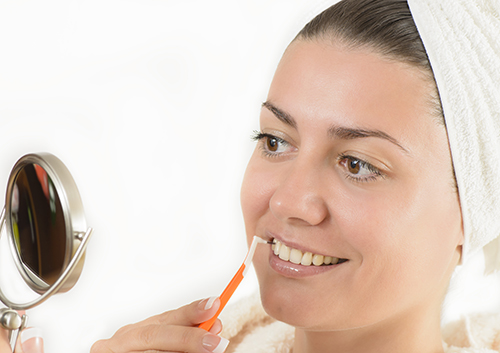
Before electric toothbrushes, before dental floss, before fluoride rinses, in fact, before recorded history, people who cared about their dental health had one primary tool—the toothpick. Ancient bronze toothpicks, bejeweled Renaissance picks, and the more humble modern wooden picks have been instrumental in promoting dental hygiene for centuries.
And, while that clean, simple design is still a good one, modern technology has found a way to build an even better toothpick. Today’s interdental picks not only dislodge food particles effectively, but now gum stimulation, cleaner orthodontic appliances, and fresher breath are available literally at our fingertips. Most important, these picks are just as effective as floss for removing plaque.
- Wood? Still Good!
Today’s softer wooden picks come in several shapes designed to fit comfortably and snugly between the teeth. Using a gentle in-and-out motion, you can clean between your teeth as you remove plaque from the tooth surface. But that’s not the only benefit! As you move the wide end of the pick up and down between teeth and gums, you are actually stimulating your gum tissue as well. They even come with mint flavoring to refresh your mouth as you clean. And, of course, wood and bamboo picks are biodegradable.
- Plastic? Fantastic!
If you’d like something a little more yielding than wooden dental picks, you have options. Soft dental picks are available that use rubber “bristles” on a plastic stem to gently ease their way between teeth. The heads are available in different diameters to accommodate tight or wide spacing between the teeth. Straight or curved stems provide the accessibility you need. If you have latex allergies, be sure to choose a rubber product that is latex-free.
- Interproximal Brushes? Here’s What the Buzz Is
You might have missed these miniature brushes in the dental care aisle, but they are worth looking for. Interproximal brushes have small cone-shaped heads with nylon bristles for cleaning food particles and plaque from between the teeth. They are good for more than one use, and some are available with angled or bendable handles for hard-to-reach spots. They come in different diameters, from wide to extremely fine, to suit the spacing of your teeth. Interdental brushes are especially useful for braces wearers, who can use these clever tools to clean tight, tricky areas under wires and around brackets.
Even though bronze, bejeweled, or golden toothpicks aren’t available in the dental aisle of the local drugstore, increased efficiency and function are well worth the trade-off. If for any reason you have trouble flossing, or if you like the idea of massaging your gums as you clean your teeth, or if you wear braces, or if you want a burst of mint flavor—for any number of reasons today’s dental picks are worth a try. Talk to Dr. Rick Johns at your next visit to our Highland, IN office, and we’ll be happy to give you some recommendations.
Toothaches and Abscesses
August 19th, 2020
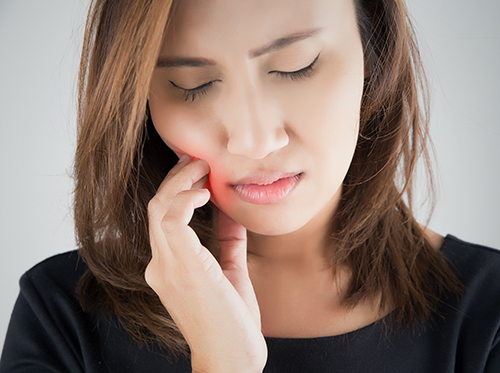
With Dr. Rick Johns, emergency dental care is only a phone call away. Dental problems are uncomfortable and should always be treated as soon as possible to prevent them from getting worse.
Whether it’s an abscess or a toothache that you believe might be something more, it’s vital to pay attention to your body and give it the attention it needs. Below, you’ll find some more information about abscesses and toothaches that may clarify any doubts about the differences, whether you may be suffering from one of them … and what to do if you are.
Abscesses
What’s an abscess? It’s a bacterial infection: an accumulation of pus that can form inside a tooth or the gums and cause pain and swelling. It generally develops as a result of poor oral hygiene.
Bacteria lives in plaque so if plaque isn’t removed on a regular basis, it can build up and encourage bacteria to spread, which could ultimately result in an abscess. Antibiotics aren’t always needed for treatment, you should get this situation checked out as soon as possible. If left untreated, oral infections can lead to bigger complications.
Toothaches
Toothaches can happen for a number of reasons. The simplest, most common one is a piece of food that is stuck in your gum, which can cause a bit of swelling and discomfort.
To get rid of it, you can rinse your mouth with hot water and salt, every morning and evening. This helps kill bacteria and bring down the swelling. You can also gently floss the area to remove whatever is stuck there. If you experience bleeding while you’re flossing, and hot water with salt proves ineffective, it may be time to schedule an appointment.
If you’re especially sensitive to cold and heat, you may often experience toothaches. If this is the case, we can recommend a pain reliever to reduce the discomfort, but it’s worthwhile to come in for a check-up anyway to make sure the problem doesn’t get worse.
The last (and most obvious) reason for a toothache is a cavity. Depending on how bad it is, we might fill it or place a crown. The tricky thing with cavities is that sometimes you may not know you have one at all, especially when they’re just starting out. The best way to prevent them from getting worse and creating toothaches is by keeping up with your regular dental cleanings.
At Rick Johns Dental, we’re here to assist you through any and all your dental emergencies! We encourage you to make an appointment at our Highland, IN office if you notice any signs of discomfort, so we can provide the most efficient care for you.
