






The History and Mythology of the Tooth Fairy
July 15th, 2020

While the last baby teeth generally aren’t lost until age ten or 11, most children stop believing in the tooth fairy by the time they're seven or eight. Of course, children are more than happy to play along with the game when there’s money at stake! While it is impossible to know what the tooth fairy does with all those teeth (are they labeled and stored like museum pieces in a giant fairytale castle?), it is possible to trace the history and myth of the tooth fairy to several cultures and traditions. Dr. Rick Johns and our team learned about some interesting myths about the tooth fairy!
The Middle Ages
Legend has it that Europeans in the Middle Ages believed a witch could curse someone by using their teeth, so it was important to dispose of baby teeth correctly. Teeth were swallowed, buried, or burned. Sometimes baby teeth were even left for rodents to eat. Despite being pests, rodents were valued for their strong teeth; it was generally believed a tooth fed to a rodent would lead to the development of a healthy and strong adult tooth.
Eighteenth Century France
The tooth fairy myth began to show more characteristics of a conventional fairytale in 18th century France. La Bonne Petite Souris, a bedtime story, tells the strange tale of a fairy that changes into a mouse to help a good queen defeat an evil king. The mouse secretly hides under the evil king’s pillow and defeats him by knocking out his teeth.
Scandinavian Lore
So, why does the tooth fairy leave money under the pillow? The idea of exchanging a tooth for coins originated in Scandinavia. Vikings paid children for a lost tooth. Teeth were worn on necklaces as good luck charms in battle. While the idea of exchanging a tooth for coins quickly spread throughout the rest of Europe, a fierce, horn-helmeted Viking is far cry from the image of a fairy collecting teeth.
While the tooth fairy as children know her today didn’t make an appearance until the 1900s, tooth myths and rites of passage have existed in numerous cultures since the dawn of time.
Make Brushing Teeth Fun!
June 17th, 2020
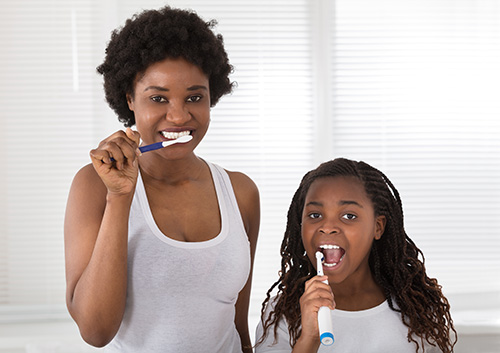
It’s understandable that kids would rather be playing outside or watching their favorite movie instead of doing a “boring” task like brushing their teeth. But there are ways to make brushing fun for your son or daughter, and encourage healthy oral hygiene habits early on! Dr. Rick Johns and our team have a few tricks that may help.
Game time
What child doesn’t love a good game? Try to turn brushing time into a game, whether by playing hide-and-seek or singing your child’s favorite song while he or she brushes for two minutes.
Kids also love rewards, so awarding them stickers after a good brushing can encourage them to do a good job every time. You might even tell your child that five stickers will earn a special treat or fun activity at the end of the week.
Fun accessories
Lots of toothbrush options can add something exciting to your child’s daily brushing routine. Toothbrushes that light up tend to be a popular choice with young kids. The same goes for toothbrushes shaped like your child’s favorite animal or cartoon character.
Teaching your kids about how long they should brush each time can also be fun. Let them have the special responsibility of setting a timer for two minutes before they start to brush.
The Great Toothpaste Experiment
Lots of kids can be picky eaters and that can the case with toothpaste flavors. Set aside a time to sample several different flavors, the way they’ve probably tried various flavors at the ice cream shop! Just make sure to be very clear that they shouldn’t swallow the toothpaste.
With your help, your child can easily develop healthy brushing habits over time. If you can find ways to make it fun, it can be an enjoyable experience for both of you!
Call Dr. Rick Johns at our Highland, IN office for more fun tips or to make an appointment today!
Root Canal Procedure
June 10th, 2020

Five words no one welcomes: “You need a root canal.” But if you are delaying treatment because you are worried about pain and an uncomfortable day in the dentist’s chair, please think again! Modern root canal procedures are designed to repair your damaged tooth gently and efficiently, and leave you with a restored natural tooth that can last a lifetime.
- Why might you need a root canal?
First, a little tooth biology. Each tooth has a crown (the part we see above the gums) and one or more roots (the part of our tooth below the gum line that is attached to bone in our jaw). The tooth has three basic layers: the hard enamel and cementum that cover the outer crown and root, the softer dentin beneath that layer, and, on the inside, the pulp. Pulp is made of living tissue, and contains the blood vessels and nerves that nourish the tooth and keep it vital.
Even with the protection the enamel and dentin provide, sometimes the pulp can be infected or damaged. If you have suffered an injury to your mouth or jaw, or an infection has developed from an opening in the tooth caused by a deep cavity or crack, you may need a root canal to prevent further infection, pain, and even tooth loss. Call our Highland, IN office immediately if you feel pain with chewing or pressure, prolonged sensitivity to heat or cold, swollen, and tender gums around a tooth, or tooth discoloration.
- The Root Canal Procedure
If a root canal is necessary, the procedure is very straightforward. After the area around the tooth is numbed, we will make an opening in the crown to allow access to the pulp inside. Very small instruments will be used to clean the inner tooth and removed bacteria and dead or dying tissue. The area will be thoroughly disinfected, and the inside of the tooth shaped and then filled and sealed. A temporary filling or crown might be placed on the tooth to prevent bacteria and food from entering the site if a permanent crown needs to be created. The entire process usually takes from one to three visits.
If we suggest a root canal, it is because this is the best way to save your tooth. Please feel free to talk to us about your particular needs and concerns. Which tooth is affected, how many roots are involved, what type of filling or crown might be best—we will work with you to provide all the information you need and all the options you have available.
Common Concerns
- Are you concerned about pain?
The most painful part of a root canal is often the severe discomfort your tooth causes before treatment. And infections and damaged nerves can affect not only the injured tooth, but the gums, tissue and even bone surrounding it. With our modern dental techniques, a root canal procedure is often no more uncomfortable than a regular filling. The local anesthetic we use will prevent you from feeling any pain during the procedure, and, while the area around your tooth might be a bit sensitive following treatment, the pain caused by the infection or injury should be gone.
- Are you anxious about the procedure?
If dental treatment causes you anxiety, please let us know. There are several sedation options we can pursue to make this procedure less worrisome. Our goal is to make your treatment as gentle and comfortable as possible.
No one welcomes the news that a root canal is necessary, but with today’s procedures, this treatment can be just what you need to relieve your pain and keep your natural tooth where it belongs for many years to come. And that is welcome news, indeed!
Water Features
June 3rd, 2020

Heading for the beach! Hiking to the lake! Keeping cool with a tall, frosty glass of ice water in a foreign bistro, or taking a refreshing gulp from the fountain in the park! Hot weather has arrived, and water is something we’re more conscious of now than most other times of the year. Even so, water as a dental feature? Glad you asked!
- Recreation
Whether you want to bask in the heat or escape it, heading out for a day in or on the water works. And while you’re protecting your skin with sunscreen, think about protecting your teeth and mouth as well. With one small slip, any physical water sport—water skiing, water polo, surfing—can result in damage to your teeth or jaw. Bring—and use—the mouthguard you wear for sports like basketball or biking, and make sure you have a summer of smiles ahead of you.
- Refreshment
Summer has a beverage menu all its own. Iced coffee and iced tea, a cooler full of sodas, fresh lemonade, fruity cocktails—so many refreshing ways to beat the heat! And we would never suggest that you turn down every frosty summer temptation. But do be mindful that dark beverages like tea, coffee, and sodas can stain teeth, sugary and acidic ones are damaging to your enamel, and alcoholic drinks can be dehydrating. Water, on the other hand, is always a healthy choice. It’s helpful for keeping your mouth and teeth clean, it often contains the fluoride that helps fight cavities, it’s hydrating—and, it has no calories! Be sure to make water a significant part of your summer beverage menu, and your body will thank you for it.
- Rinse & Restore
Water’s importance to our bodies can’t be overstated! From major organs to individual cells, we need water. And one major benefit of proper hydration is healthy saliva production. Why is that important? Saliva plays a vital role in preventing cavities. It washes away the food particles that oral bacteria feed on, reducing their ability to produce the acids that lead to enamel erosion and cavities. Saliva even helps neutralize acids already in the mouth. Finally, saliva contains important calcium, phosphate and fluoride ions which actually help restore enamel strength after it has been exposed to oral acidity.
Summer goes by all too quickly. Protect your teeth during these warm, active months with a mouthguard. And whether you spend your free time outdoors, or visiting people and places, or keeping cool at home, be mindful of dental-friendly beverage options and always stay hydrated. You’ll be ready to greet fall with a beautiful smile and healthy teeth. “Water Features”? Perhaps a better title would be “Water Power”!
