






Best Ways to Prevent Bad Breath
December 25th, 2018

Nobody likes bad breath, and although it can sometimes be difficult to tell if you have it, it is always better to practice good oral health than risk having a smelly mouth. There are many ways to reduce or eliminate bad breath, some are definitely more effective and longer lasting than others. Check out ways to do so below.
Floss Regularly
As difficult as it can be to remember to floss regularly, when it comes to bad breath, flossing is one of the easiest and most cost effective ways to freshen your mouth. See, flossing reduces the plaque and bacteria found in areas of your mouth that a toothbrush simply can't reach, and in turn, it rids your mouth of the smell associated with that bacteria. While flossing may not eliminate bad breath on its own, if you do it along with other health oral hygiene habits like brushing, then you may just develop a fresher smelling mouth.
Use Mouthwash
Using some sort of mouthwash can really freshen up your breath, especially if you find it still smells after brushing and flossing. There is a wide variety of mouthwash products on the market, however, you can also create your own by simply using baking soda mixed with water.
Always Brush after You Sleep
Whether after taking a nap, or having a full night of sleep, you will want to brush your teeth in order to reduce bad breath. The truth is, bacteria accumulates in your mouth while you are sleeping (even during a short nap) and that is ultimately the source of bad breath. So next time you wake from a good slumber, give your mouth some brushing and you will find it makes a big difference in the freshness of your breath.
There are many ways to freshen your breath beyond just using gum or mints, the above mentioned are just a few for you to try. Test them out and you will likely find your bad breath problem is solved, or at least considerably reduced. Of course, you can always ask Dr. Rick Johns at your next visit to our Highland, IN office.
How safe are dental X-rays?
December 18th, 2018

Dr. Rick Johns and our staff rely on digital X-rays to help us diagnose oral conditions and process images at incredibly high speeds. You can also view digital X-rays in real time while we examine your mouth with an intraoral camera and upload the images to a software program. A chairside computer monitor lets you see these images as we refine areas of concern to ensure an accurate diagnosis.
But are dental X-rays safe?
Yes! They emit 80 percent less radiation than exposure-type X-rays and provide detailed images to improve diagnosis and treatment. We can now detect dental problems in their earliest stages without subjecting you to unnecessary radiation. The amount of radiation released by digital X-rays is “negligible,” which means the amount is so small, that it can be safely disregarded.
Safe enough for children and pregnant women, digital X-rays detect microscopic pitting in tooth enamel and other abnormalities in the oral tissues that might have remained undetected with traditional X-rays. When Dr. Rick Johns and our staff discover dental caries in their earliest stages, we can initiate treatment measures that will effectively prevent cavity development, tooth decay, and potential tooth loss.
Patient appointment lengths are shortened with digital X-rays as well, because images are immediately viewable and do not require the exposure time associated with old-style X-rays.
How Digital X-Rays Differ from Traditional X-Rays
Instead of using cardboard-contained film, we insert a small sensing device about the size of a pen in your mouth and engage the digital X-ray machine by manually manipulating control buttons. Within seconds, images appear on the monitor that can later be stored in your file or sent to another doctor for further examination.
The increased resolution afforded by digital X-rays means that patients are able to understand the seriousness of their dental issues better, and are more inclined to follow through with procedures recommended by Dr. Rick Johns.
Safer, Better and Faster
For detection of cancerous tumors in their early states, digital X-ray technology offers vast improvements over film X-rays because of its cutting-edge image processing capability. Early detection of oral cancer and dental caries is the best way to prevent any type of oral health problem from exceeding the treatable stage.
What did the first dentures look like?
December 11th, 2018
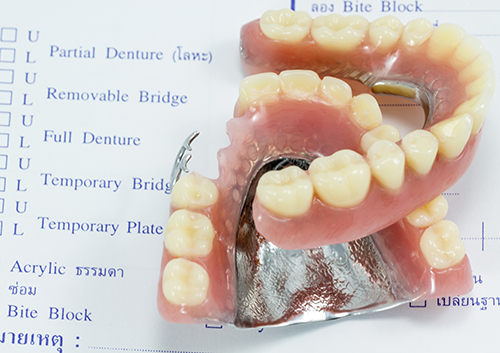
Remember hearing about George Washington and his wooden choppers? Not his tools for cutting down cherry trees, but his false teeth.
Actually, George’s teeth were made of ivory but were so stained that they appeared to be made out of wood. You might think those were the earliest dentures. In fact, the history of false teeth goes back centuries before President Washington.
Ancient Times
The earliest known dentures consisted of human or animal teeth tied together with wires. Examples of such dentures have been found in Egyptian and Mexican archeological sites. Other ancient peoples use carved stones and shells to replace lost teeth. These early dentures were probably made for cosmetic purposes. The materials they used were not likely to stand up to the pressure placed on teeth during eating.
The earliest surviving set of complete dentures were actually made out of wood (sorry, George). They were found in Japan and date back to the 16th century.
Human and animal teeth continued to be popular materials for dentures until the 20th century in some parts of the world. But the difficulty obtaining healthy teeth (and the risk of disease from unhealthy teeth) led dentists to search for other substances.
Modern Era
In the 18th century, dentists began using porcelain, ivory, gold, silver and even rubber as tooth substitutes. Dentures made with these substances could be used in eating. They were often ill-fitting, however, which may explain why George Washington looks puffy and glum in many portraits.
Porcelain and metals were the most popular denture materials until about 1950, when plastics and resins were developed. Tough and durable, these materials make up most of the dentures Dr. Rick Johns and our team use today.
Still, what goes around comes around. Researchers at the University of Texas are looking at using human teeth for dentures once again. Only in this case, the researchers hope to use biotechnology to spur the growth of new sets of teeth to replace those lost over a lifetime.
Overall Health Can Be Influenced By Oral Hygiene
December 4th, 2018

Keeping on top of your oral health is key when it comes to making sure your whole body stays healthy. The bacteria that occur naturally in your mouth can produce harmful bacteria such as strep and staph, which can lead to serious infections and sickness.
When you follow good dental habits like daily brushing and flossing, and eat a healthy diet, you can discourage harmful bacteria from traveling from your mouth to other parts of your body. Protect yourself and learn more about the link between oral hygiene and a healthy body.
Until recently, tooth decay was more common because of the lack of regular dental care and research behind fluoride. Tooth decay is much less problematic today, due to fluoridated water and toothpastes that contain fluoride.
Nowadays, gum disease has replaced tooth decay as the most frequent dental problem. Periodontal disease is on the rise among adults because people don’t floss regularly and then ignore gum tenderness and bleeding. If left unchecked, periodontitis can cause inflammation that may cause harm to other parts of the body.
Oral Health and Chronic Disease
Many scientists believe inflammation-related infections can trigger systemic disease or intensify existing conditions. Remember, bacteria overgrowth in inflamed gum tissue is able to enter the bloodstream through your eating processes, which is why it’s so vital to visit our Highland, IN office if you notice sustained gum irritation and inflammation in your mouth.
Caring for your teeth and gums every day can prevent the onset of disease and save you trouble in the future with regard to your body’s health. If you think you may be showing signs of periodontal disease, or notice anything else out of the norm, please contact Dr. Rick Johns and schedule an appointment.
We want you to be proactive about your health!
