






Crushing the Ice-Chewing Habit
October 30th, 2018
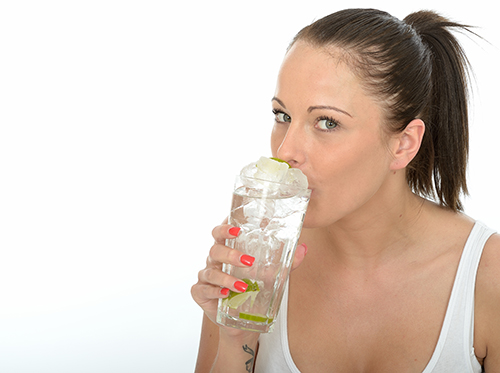
It's a habit many people have and not only can it be annoying to the people around you, it can be detrimental to your dental health. Chewing ice is so common that it even has its own name, pagophagia. We're not talking about a slushy or shaved ice (although those artificially sugary treats should be avoided too!) but more like the hunks of ice rattling around in the bottom of your glass.
Ice chewing can be a sign of emotional problems like stress or obsessive-compulsive disorder, but it can also be a marker for iron deficiency anemia and other physical problems. Then again, some people just like to have something to chew on. For whatever reason you find yourself chewing on it, it's a habit you need to break.
Chewing on ice can cause:
- Chipped and cracked teeth
- Damaged enamel
- Sore jaw muscles
- Damage to dental work such as crowns, fillings, or other appliances
If chewing on ice is becoming a problem in your life, don’t hesitate to speak with Dr. Rick Johns about it. But if you find yourself still wanting to chew on something, here are a few alternatives to ice:
- Baby carrots
- Celery sticks
- Sugar-free (xylitol) gum
We know you need to chill sometimes, but chomping down your entire glass of ice is not the way to do it. If you have any other questions on the topic, feel free to talk with a member of our Highland, IN team. It may be beneficial in solving the issue and helping to remediate any damage to your teeth.
Camping Oral Health Tips
October 23rd, 2018

If your idea of camping is a quiet walk through the woods before returning to your rustic hotel, your regular brushing habits will be perfect for your trip. But if you are hiking into the mountains with your tent, backpack, and camp food, Dr. Rick Johns and our team have some suggestions to adapt your dental routine to the great outdoors.
Water
If you wouldn’t drink it, don’t brush with it! Use bottled water if you have brought it, or make sure the local water is safe by using a testing kit. Boiling, filters and purification tablets are all ways to make sure the water tests clean and safe.
Toothpaste
You aren’t the only one in the woods who finds your toothpaste tasty. Bears, raccoons, and other animals are attracted to the scent of your toothpaste, so keep it safe with the same kind of tightly sealed, odor-proof container that you keep your food in. And if you want to discourage unwanted visitors, don’t spit your toothpaste out at your campground! It’s better to go some distance from your site and bury any paste, and best of all to spit used toothpaste into a container that can be tightly closed and removed from the campsite when you head for home. This practice protects you and the environment as well, since toothpaste can be harmful to small animals and plants.
Toothbrush
While there are disposable and camping toothbrushes available, a regular toothbrush will work as well. Normally, air-drying is the healthiest option for drying your toothbrush, but camping is an exception. Just as animals are attracted to toothpaste, they are also attracted to your toothpaste-scented toothbrush. Keep it in a sealed container that is odor-proof.
Floss
There are websites devoted to the many ingenious ways to use dental floss while camping, but we recommend the original use. Don’t forget to floss regularly, keep it in a sealed container, and do be sure to take used floss out of the area with you.
Even though you are roughing it, stick with your home routine as much as possible. If you are unable to brush as usual, rinse your mouth well with clean water and brush when you can. Have a great trip, and just one more thought—maybe go easy on the s’mores. Let us know all about your trip during your next visit to our Highland, IN office!
What exactly is a cavity?
October 16th, 2018

We all know how discouraging can be it to hear you have a dental cavity. Knowing how cavities form can help you prevent them from popping up in your mouth. If you want to avoid a trip to see Dr. Rick Johns, pay attention to the measures you can take to prevent bothersome cavities.
Did you know that cavities are properly a symptom of a disease called caries? When you have caries, the number of bad bacteria in your mouth increases, which causes an acceleration in tooth decay. Caries are caused by a pH imbalance in your mouth that creates problems with the biofilm on the teeth.
When there are long periods of low pH balance in the mouth, this creates a breeding ground for bacteria. When you get caries, this type of bacteria thrives in an acidic environment.
Depending on which foods and beverages you consume, the biofilm pH in your mouth will vary. The lower the pH number, the higher the acidity. When your intake contains mostly acidic foods that sit on your teeth, cavities begin to form. Water has a neutral pH, which makes it a good tool to promote a healthy pH balance in your mouth.
A healthy pH balance in your mouth will prevent cavities from forming over time. Mouth breathing and specific medications may also be factors that contribute to the development of caries when saliva flow decreases. Without saliva flow to act as a buffer against acid, bacteria has a higher chance of growing.
Don’t forget: Getting cavities isn’t only about eating too many sweets. It’s also about managing the pH levels in your mouth and preventing bad bacteria from growing on your teeth.
If you think you might have a cavity forming in your mouth, schedule an appointment at our Highland, IN office. It’s worthwhile to treat cavities early and avoid extensive procedures such as root canals from becoming necessary.
Keep up with brushing, flossing, and rinsing with mouthwash so you can prevent cavities over time.
Find Out how Your Diet can Cause Cavities
October 9th, 2018

Sometimes food that’s good for your body isn’t necessarily the best for your teeth. Dr. Rick Johns and our team want you to know which healthy foods can harm your teeth and gums, and what steps you can take to continue enjoying these foods, even when you’re dieting.
When you begin to substitute empty calories with whole foods, make sure you also remember to focus on your dental health. The majority of people tend to switch out sugary foods in favor of fruits and vegetables when they diet.
It’s worth knowing that most fruits are highly acidic and composed of natural sugars. Some of the highly acidic fruits to watch out for include apples, grapes, strawberries, pineapples, blueberries, oranges, and grapefruit. Moderation is key here, as with all other things. Fruits can be a great source of energy to help you through your day, but try not to overdo them.
Often, people also incorporate more leafy greens into their diets, which mean plenty of salads. Salad dressing is another item you’ll want to watch out for. Many dressings are filled with vinegars and sweeteners that include harmful acids, which change the pH of your mouth. When your mouth shifts from alkaline to acidic, your smile also turns to a higher risk for erosion and decay.
Rather than get rid of these foods altogether, simply change what you do after you eat them. Rinse your mouth out with water, brush your teeth, or eat alkalizing foods after consuming these acidic foods. Healthy alkalizing foods include dairy products such as eggs and yogurt, or any type of vegetable.
If you have questions regarding your current diet and its effect on your oral health, please contact our Highland, IN office and speak with a member of our staff. If you’ve begun to make changes in your diet toward a healthier lifestyle, we hope these tips can help your make positive changes to your oral health. Our team at Rick Johns Dental wants a healthy lifestyle to be a top priority in your life.
