






Why do wisdom teeth need to be removed?
March 28th, 2017

Dr. Rick Johns and our team at Rick Johns Dental get this question a lot. Wisdom teeth are the last teeth to come in, once young people get their adult teeth. Because they are the last teeth to break through the gums, they are often called the third molars. There are four wisdom teeth: two on each side of the top and bottom of the mouth.
There is no hard-and-fast rule that says everyone must have the wisdom teeth removed. There are certain situations in which they either cause problems directly, or create a situation where there is a greater likelihood problems will arise eventually.
Impacted wisdom teeth
If Dr. Rick Johns and our team say you have a soft tissue impaction, it means your wisdom tooth is covered by gum tissue that is preventing it from erupting — most likely because your mouth is too small to provide the tooth with the room it needs to emerge.
The term “partial bony impaction” means that gum tissue is covering the wisdom tooth, but part of the jaw bone is also covering it, in which case there is no room in your mouth for the tooth to erupt. The opposite end of this spectrum is a complete bony impaction, where the wisdom tooth is completely covered by gum tissue and the jawbone, which prevent it from ever erupting.
The importance of removing impacted wisdom teeth
Dentists often want to remove impacted wisdom teeth because of the likelihood that they will cause problems, or because a problem already exists. One such problem is pericoronitis, an acute abscess that affects partially impacted wisdom teeth. Food, bacteria, and other mouth debris can become lodged under the gum flap that covers the wisdom tooth, which prevents it from erupting. Pericoronitis symptoms include pain, swelling, and the presence of an abscess.
Regular dental checkups will enable your dentist to keep an eye on your wisdom teeth, especially if they have some type of impaction. Dr. Rick Johns and our team at Rick Johns Dental typically recommend removal of impacted wisdom teeth because of the likelihood that severe infections such as pericoronitis will develop.
If you have any questions about wisdom teeth, or if you would like to schedule an appointment with Dr. Rick Johns, please give us a call at our convenient Highland, IN office!
I have halitosis. What can I do?
March 21st, 2017

Halitosis is the fancy, scientific word for “bad breath.” Dr. Rick Johns and our team know there are several reasons why you may have halitosis; let’s look at a few:
- Gum disease (also known as periodontal disease) – There are five main types of gum disease, and each one can range from mild to severe. For example the most common one is gingivitis; it is caused by bacteria in the plaque that has been allowed to build up, usually as a result of poor oral hygiene. A more serious and uncommon type of gum disease is called necrotizing periodontal disease. It is most common in people who have a suppressed immune system.
- Smoking
- Dry Mouth – This can be caused by something as simple as a medication you take.
- Food – Of course, if you eat something that is potent like garlic, it is going to give you bad breath.
- Diseases of the Body – Some diseases such as sinus infections and diabetes, among a few other types of infections, can also cause you to have halitosis.
How to Get Rid of Halitosis
The most obvious answer to how to get rid of halitosis is to practice good oral hygiene, although, depending on the cause of halitosis it may not be that simple. If you have an infection that is causing the halitosis then you may need an antibiotic to clear up the infection and then the bad breath will go away. Here are more tips:
- Brush your teeth after every meal and before bed.
- Floss your teeth. The more plaque you get out of your teeth, the better chance you have of not getting cavities or bad breath.
- Address any medical conditions that are not related to your teeth that can be causing the halitosis.
- Ask Dr. Rick Johns for a prescription mouthwash that kills bacteria.
Halitosis (bad breath) can be an embarrassing condition to live with, but there are plenty of ways to get rid of it permanently. Start by talking to a member of our team at our Highland, IN office.
Avoid Brushing After Every Single Meal!
March 14th, 2017
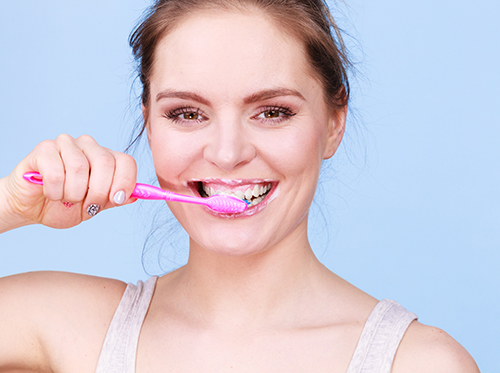
Here is some surprising yet worthwhile advice you might be hearing for the first time: Brushing after a meal can be incredibly bad for your teeth if you do it after eating certain foods.
Enamel is an extremely hard mineral on the exterior of each of your teeth. It’s actually the hardest substance in the human body: It’s even stronger than your bones! Its only weakness is that acids in the food we eat can easily destroy enamel.
Healthy teeth thrive in an environment that has the proper pH balance. That ensures your mouth doesn’t start the process of demineralization. That’s what happens when alkaline turns into acid, which attacks and softens the enamel on the surface of your teeth. Pores and fissures form, and that’s when the harmful bacteria go to work.
Our mouth’s pH level fluctuates depending on what we eat throughout the day. Examples of the most common highly acidic foods include citrus fruits, soda, and sugary foods. Highly acidic foods tip the balance of pH in your mouth from a healthy alkaline to a dangerous acid.
Can brushing your teeth immediately after a meal lead to even more damage? The answer is yes!
Eating highly acidic foods causes your teeth to be more susceptible. If you brush your teeth when they have been weakened by acids, even more destruction can happen to your enamel. Your toothbrush’s bristles will actually wear away some of your enamel. So it’s healthier to wait at least an hour after eating or snacking to brush.
Good preventive measures to take instead of brushing after you eat include:
- Rinsing or drinking water
- Chewing sugarless gum
- Consuming dairy or non-acidic foods to conclude your meal
These practices help produce saliva, which in turn restores a healthy pH level in your mouth and coats the teeth with minerals they need.
Once you’ve allowed time for your mouth to be restored to a healthy pH level, you may brush your teeth as you normally would. Keep in mind that acidic foods can weaken the enamel on your teeth and take the right measures to prevent spiking pH levels.
Most important, don’t forget to wait to brush at least one hour after you eat!
Still have questions? Call our Highland, IN office and schedule an appointment with Dr. Rick Johns.
How many times a day should I floss?
March 7th, 2017

Flossing is one of the most important parts of your oral care routine. Many patients know they need to do it but find it difficult to fit into their busy lives. Well, here's the good news: flossing once a day is enough if you're doing a good job!
Some patients like to brush before they floss and others like to floss before they brush. Some like to floss in the morning when they have more energy, others like to floss at night so they can go to bed with a clean mouth. Don't get hung up on any of this, the important thing is that you floss and floss effectively no matter when you do it.
Effective flossing contributes to oral health in these ways:
- It reduces the chance of cavities between teeth, since cavities can only form on teeth covered with dental plaque and you're scraping that plaque away when you floss.
- Along with brushing, it reduces the amount of time the plaque is left on your teeth, allowing them to be in a state of healing and remineralization for longer.
- It removes plaque that accumulates at or below the gum line, aiding in the prevention of gum disease.
As you can see, flossing offers many benefits for such a simple and inexpensive technique. So if you're still wondering how much to floss, don't worry about it. Don't mistake the frequency of your flossing with the effectiveness of it. Choose a dental floss that you like and one time during the day when you can floss thoroughly and just do it! If you need more tips on how to floss correctly, ask Dr. Rick Johns or any member of our Highland, IN team—we'd be glad to help you pick up this healthy habit!
