






When do children usually lose their baby teeth?
May 26th, 2015

Many parents worry that their children’s teeth are not falling out on time. A lot of concerned parents want to know: When will my child lose his or her first baby tooth? At what age should the last tooth fall out? Is there a specific order in which the teeth are lost?
Dr. Rick Johns and our team explain that a child's 20 baby teeth (primary teeth) typically come in by age three and begin to loosen and fall out on their own to make room for permanent teeth, which usually appear by the time your child is six. It is important to know that timing may vary, and girls typically lose their baby teeth earlier than boys. The last baby teeth will likely fall out by the time your child is 13.
So, which teeth do children lose first? Baby teeth tend to fall out in the order in which they came, which means the lower center incisors are usually the first to go when your child is between six and seven years old. The next teeth your child will lose are his or her top center pair, also called the upper central incisors.
It’s important to note that if a child loses a baby tooth early as a result of decay or an unforeseen accident, his or her permanent tooth may erupt early and potentially come in crooked due to limited space. If your child suffers an injury or has tooth decay, we encourage you to give us a call to set up an appointment with Dr. Rick Johns.
While we know some children couldn’t be more excited to lose their baby teeth, we know others are anxious about this childhood milestone. When your child starts to lose teeth, our team at Rick Johns Dental encourages you to stress the importance of proper dental care on a daily basis.
Remember to:
- Remind your child to brush his or her teeth at least twice a day. Supervise and offer assistance as needed.
- Help your child floss his or her teeth at bedtime.
- Limit eating and drinking between meals and at bedtime, especially sugary treats and drinks, such as candy and soda.
- Schedule regular dental visits for your child every six months.
- Ask about the use of fluoride treatments and dental sealants to help prevent tooth decay.
To learn more about baby teeth, or to schedule your child's next visit with Dr. Rick Johns at our Highland, IN office, please give us a call today!
Memorial Day
May 19th, 2015

Memorial Day is not only a federal holiday in the United States, but it is a day of observance and remembrance of those who died in service. Originally known as Decoration Day, this solemn day has been marked on calendars since the end of the American Civil War as a day to commemorate both the Confederate and Union soldiers who fought and died in the war.
Marking the graves of fallen soldiers with flowers, wreaths, or other tokens has been practiced throughout history, but it wasn't until the mark of the end of the Civil War that a special day was decided upon as the one to spend in remembrance. By 1890, every state in the country was observing Decoration Day. It wasn't until 1967 when the name formally changed from Decoration Day to Memorial Day, in order to encompass all fallen American soldiers in all wars and conflicts. In June of 1968, Congress moved the official date of Memorial Day to the last Monday in May in order to create a three day weekend.
Today, while there is certainly an air of remembrance on Memorial Day, it has become more a day of spending time with family, friends, and other loved ones. This day is also heralded as the start of summer, with many schools finishing for the year around this time. Our team at Rick Johns Dental remembers it as a day to take solace and remembered those lost.
Traditional observances of Memorial Day are still held, and they often involve raising the American Flag then lowering it to a half-staff position until noon, and then raising it once again to its full height afterwards. The flag is lowered to remember those who've lost their lives while in service to their country, and then it is raised to signify our willingness to not let their sacrifice be in vain.
From community parades in the Highland, IN area, backyard cook-outs, and fireworks to formal ceremonies, Memorial Day is commemorated in many different ways. No matter how you choose to spend this day, take a moment to remember those who've lost their lives in an effort to preserve our freedom.
How can I protect my child's teeth during sports?
May 12th, 2015
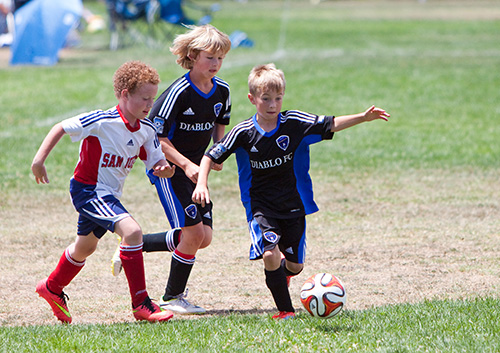
Sports are great for children for a variety of reasons. Children can develop their motor skills, learn how to solve conflicts and work together, and develop their work ethics. As a parent, you may recognize the benefits of sports, but also naturally worry about your child’s health and safety. Your job goes beyond providing a water bottle and making sure your child follows the rules of the game.
Although you may not think of your child’s teeth first when you think about sports, accidents can happen that affect your children’s teeth. A stray hockey stick, an errant basketball, or a misguided dive after a volleyball are examples of ways a child could lose a tooth. In fact, studies show that young athletes lose more than three million teeth each year.
Becoming a Better Athlete to Protect Teeth
Becoming a better athlete involves refining skills, learning the rules of the game, and being a good sport. These components are not just about winning. They are also about safety. Young athletes who are better ball-handlers and who are careful to avoid fouls and penalties are less likely to have harmful contact with the ball, teammates, or opponents. Children who are better roller-bladers are less likely to take a face plant into the blacktop, and more likely to save their teeth. Being a good sport and avoiding unnecessary contact is one way to protect teeth.
Proper Protective Equipment for Teeth
If your child is in a sport that poses a high threat to teeth, it is essential for your child to wear a mouthguard. Mouthguards fit your child’s mouth and consist of soft plastic. Dr. Rick Johns can custom fit a mouthguard if generic ones are uncomfortable. While children may resist wearing a mouthguard initially, your persistence in insisting that they wear it should be enough to convince them. A helmet or face mask provides additional protection.
While prevention is best, rapid treatment can improve the situation if your child does happen to lose a tooth during sports. Rapid implantation can work in about ten percent of cases. To learn about ways to save a lost tooth, contact our Highland, IN office.
Summer is Almost Here: Tips for a bright, white smile!
May 5th, 2015

Summer is almost here, which means a season full of vacations, adventures and great memories is just around the corner for our patients at Rick Johns Dental.
Everyone wants a glowing and radiant white smile when the sun comes around and we have a few reminders to keep your pearly whites healthy and beautiful over the summer! Try to stay away from drinks that will stain your teeth like coffee, soft drinks, or dark colored juices. Not only will drinks like this weaken your enamel but they will also darken that fabulous smile you're working on! Another tip is to try and focus on brushing your teeth; everyone knows that when busy schedules start picking up, getting a good brushing session in tends to take the backseat! A good tip for keeping your mouth safe from staining and other possible pitfalls is to rinse your mouth with water after any meal you can’t fully brush your teeth after. Your teeth, inside and out, will benefit!
And remember, whether you are headed to a barbecue, a camping trip, or just having fun in the backyard this summer, we want to hear all about it! Make sure to let us know what you’re up to below or on our Facebook page! We also encourage you to post any photos from your adventures!
