






Electric or Manual Toothbrush: Why It Does (and Doesn't) Matter
April 28th, 2015
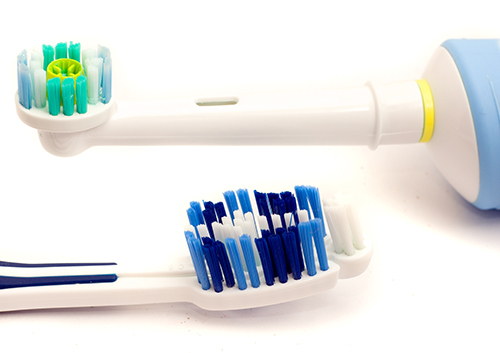
You live in the golden age of toothbrushes. Until a few decades people used twigs or brushes made from animal hair to clean their teeth: not very soft and none too effective.
Now, you have a choice of manual brushes with soft, medium, or hard bristles. Or you might choose to go with an electric toothbrush instead.
Have you ever wondered whether manual or electric brushes provide better cleaning? Actually, they both do the job. The key is to brush and floss every day, regardless of the kind of brush you prefer.
At our Highland, IN office, we like to say the best brush is the one you'll use. So if you prefer manual, go for it. If you prefer electric, turn it on.
Both types have their advantages but both types will get the job done as far as removing plaque.
Electric Toothbrushes
- Provide power rotation that helps loosen plaque
- Are great for people with limited dexterity due to arthritis or other problems
- Are popular with kids who think the electric brushes are more fun to use
- Can come with variable speeds to help reduce pressure on sensitive teeth and gums
Manual Toothbrushes
- Can help brushers feel they have more control over the brushing process
- Allow brushers to respond to twinges and reduce the pressure applied to sensitive teeth and gums
- Are more convenient for packing when traveling
- Manual brushes are cheaper and easier to replace than the electric versions.
In many ways, the golden age is just beginning. There are already phone apps available to remind you to brush and floss. New apps can play two minutes worth of music while you brush, help you compare the brightness of your smile or help explain dental procedures. Maybe someday we’ll even have programs that examine your teeth after brushing and identify spots you might have missed.
Earth Day
April 21st, 2015

The idea for Earth Day was the brainchild of Gaylord Nelson, a senator from Wisconsin. He envisioned an Earth Day that would be a kind of environmental teach-in. The first Earth Day celebration took place on April 22, 1970, and a surprising 20 million people participated on that day. Ultimately, it became the largest organized celebration in US history.
Earth Day Over the Years
Over the years, the recognition of the day, and the number of people celebrating it all over the world, turned Earth Day into an international celebration. Because it is celebrated throughout the world, it is not only the largest international environmental observation, but it is also more widely celebrated than any other environmental event in the world. Today, Earth Day is celebrated in 175 countries where over 500 million people participate in celebrations.
The Earth Day Movement
The Earth Day movement is credited with developing the idea that people should “think green”. It encouraged congress to enact laws, including one that resulted in the creation of the Environmental Protection Agency. It also inspired the passage of the Endangered Species Act.
The Five R's and Their Importance
- Reduce – Reduce by avoiding unnecessary purchases. Reduce your use of materials that wind up in landfills. Reduce the use of chemicals around your house. Reduce your use of disposable bags, plates, cups, eating utensils, and batteries.
- Reuse – Instead of using plastic bags for your groceries or purchases, bring your own reusable bags. When you go to buy coffee at Starbucks, take a travel mug so you don't have to get your coffee in a disposable paper cup. Instead of storing food in disposable refrigerator containers, buy containers that can be washed and reused. Don't use regular batteries. Whenever possible, opt for rechargeable batteries that you can reuse.
- Recycle – Most cities offer a recycling program to collect used bottles, cans, and newspapers. Recycling includes collecting recyclable materials that would otherwise be considered waste, sorting and processing recyclables into raw materials such as fibers and manufacturing raw materials into new products.
- Re-buy – Make an effort to purchase things that are made through recycling. When purchasing furniture, look for items that are made from reclaimed wood. When buying paper for kids school work, computer printer paper, holiday cards, or anything else, make a point of purchasing recycled paper products. Instead of buying clothing at full retail price, shop for second hand clothing. You will save a lot of money by doing so!
- Rethink – Rethink the way you do things so that you do them in an eco-conscious way at all times. Instead of driving to work alone, consider taking the bus or going in a carpool. Walk or ride your bike when you're only going a short distance. Plan your shopping trips and errand runs so that you can do everything on one day, and do it in a way where you can save time and gas.
Other ways to "think green" include growing your own food, composting yard waste and food scraps, or by participating in local recycling programs. Join a group like Freecycle so you can share your unneeded and unwanted possessions with people who can use them. Likewise, you'll be able to get things you need or want for free.
Earth Day teaches people that the planet belongs to everyone, so everyone is equally responsible for protecting it. Although Earth Day is an environmental celebration, our team at Rick Johns Dental wants to remind you that you don't have to wait until then to make changes that will allow you and your family to live a greener life.
Happy Earth Day from the team at Rick Johns Dental.
HPV and Oral Cancer
April 14th, 2015

Human papillomavirus, or HPV, is best known as a sexually transmitted infection. In the United States, HPV is the most common sexually transmitted disease, with 79 million Americans currently infected, according to the Centers for Disease Control and Prevention. In addition to increasing risk for cervical cancer, HPV is a contributing factor in some cases of oral cancer. Each year an estimated 1,700 women and 6,700 men develop oropharyngeal cancer, which affects the tongue and throat.
Connection between HPV and oral cancer
There are more than 40 strains of HPV that live in the skin and mucosal areas. Some of these affect the genitalia, while others are found in the mouth and throat. Of the strains of oral HPV, only one, called HPV16, increases the risk of oral cancer, the Oral Cancer Foundation reports. A retrospective study conducted found that oral cancer developed an average of 15 years after exposure to HPV, making it a relatively slow-growing form of cancer.
In general, 80% of Americans will have an HPV infection at some point in their lifetimes, while 99% develop no ill effects. Getting oral HPV is associated with multiple sexual partners and engaging in oral sex; however, even some individuals who have been with only one partner may contract the infection. Although overall risk of oral cancer from HPV infection is low, it is essential to be proactive about oral health.
How to prevent HPV-related oral cancer
Scientists continue to study how HPV infections lead to oral cancer, so little is known about the progression of the disease. However, one recent study found that poor oral health, including gum disease and poor oral hygiene, is associated with oral cancer risk. Thus, being vigilant about brushing and flossing your teeth regularly may reduce HPV-related oral cancer. Getting the HPV vaccine also protects against the oral form of the virus.
Another key way to reduce mortality from oral cancer is to have regularly scheduled appointments with at Rick Johns Dental. Having Dr. Rick Johns examine your mouth at least two times a year increases the likelihood that a sign of oral cancer, such as a sore or patch, will be detected. If you’re concerned about HPV-related oral cancer, please give us a call at our Highland, IN office for advice about oral hygiene and disease prevention.
April is Oral Cancer Awareness Month
April 7th, 2015

What is oral cancer?
April is Oral Cancer Awareness Month. If you have been putting off a visit to our Highland, IN office, now is an excellent time to schedule one. Regular visits to Rick Johns Dental can be the first line of defense against oral cancer, by identifying early warning signs of the disease, or helping you with preventive care tips to lower your chances of developing it.
Oral Cancer Rates in America
Nearly 40,000 people in the U.S. will be diagnosed with oral cancer this year, and more than 8,000 die every year from this disease. It is a devastating illness: most people who are diagnosed with it do not live more than five years beyond their diagnosis. Oral cancer has a higher death rate than many other common cancers, including cervical cancer, testicular cancer, Hodgkin’s lymphoma, and thyroid or skin cancers. The high death rate results from the fact that most oral cancers go undiagnosed until the disease is well advanced and has spread to another part of the body—most often, the lymph nodes in the neck.
What causes oral cancer?
While there is no way to predict exactly which individuals will get oral cancer, there are some potential causes you should know about—because in some cases, you can minimize these risk factors.
- Age (most patients diagnosed with oral cancer are over the age of 40)
- Tobacco use, either from cigarettes or smokeless chewing tobacco
- Excessive alcohol consumption (especially in combination with tobacco use)
- Persistent viral infections, such as HPV16
- A diet low in fruits and vegetables
In addition, oral cancer tends to occur at a rate six times greater in men than in women, and more often for African Americans than other ethnic groups. No genetic links have been identified to explain the higher incidence in these populations, so lifestyle choices remain the likeliest cause.
Oral Cancer Treatments
Once a diagnosis has been made, treatment of oral cancer usually involves a multi-disciplinary team that includes surgeons, oncologists, dentists, nutritionists, and rehabilitation and restorative specialists. Our team will decide on the best approach for each patient, depending on the risk factors and how far the cancer has progressed. The strategy will be different in every case. Some of the most common methods include chemotherapy, radiation, and potential surgery.
Finding out you have cancer can be devastating news. If you are concerned that you might be at risk for developing oral cancer, talk to us about screenings and other things you can do to reduce your risk.
