






What is an Impacted Tooth?
June 15th, 2023

You may have heard this term the first time you or a friend got your wisdom teeth. That makes sense, as wisdom teeth are the teeth most often impacted in teenagers and young adults. But other permanent teeth can be impacted as well. What exactly do we mean by “impacted teeth,” and what can we do to treat them?
The term “impacted” means that somehow a tooth has been blocked from erupting properly. A tooth may be completely blocked by another tooth, erupt in the wrong space, or even come in from the wrong direction. Depending on the teeth involved, there are several different options for treatment.
From Baby Teeth to Permanent Teeth
Normally, when children lose a baby tooth, a permanent tooth is right there, ready to take its place. But teeth don’t always behave according to plan. Occasionally, that baby tooth just won’t budge, and the permanent tooth starts to erupt behind it. When this happens, a simple baby tooth extraction will often let the permanent tooth move into its proper position on schedule.
A more complicated situation develops when upper teeth are impacted because there isn’t enough space in the mouth for them. In this case, a device called a palatal expander might be used to gradually widen the upper jaw to allow the permanent teeth to erupt without crowding.
In other rare cases, a tooth (often the canine) fails to erupt and may require oral surgery to uncover it, followed by orthodontic treatment to guide it into position.
Impacted teeth can result from other causes as well, and every impacted tooth should be treated as quickly as possible. Left untreated, the teeth can fail to erupt at all or erupt in the wrong place, crowd other permanent teeth, damage the roots of the teeth near them, and lead to difficulties eating and dental pain.
Wisdom teeth
Wisdom teeth are often a problem because there is simply not enough room in the jaw for them.
Wisdom teeth that are completely impacted (still in the jawbone) can sometimes be left alone if they aren’t causing other problems. But if impacted wisdom teeth develop cysts, affect the teeth around them, or lead to other dental complications, they should be extracted.
Partially erupted teeth, those that have begun to emerge through the gums but don’t erupt fully, can be the source of different gum and tooth problems. Because the gum tissue overlaps the tooth, food particles and bacteria can become trapped, leading to rapid tooth decay and even infection. In this case, extraction is probably the best option.
Be Proactive
The term “impacted” actually comes from the Latin root meaning “pushed against.” But teeth that don’t erupt at the right time, in the right place, can have a different kind of impact on dental health and appearance. And the earlier we can catch these problems, the easier it is to treat them.
Regular exams and X-rays with Dr. Rick Johns at our Highland, IN office will show the progress of the teeth even before they erupt, and if there will be the space for them to fit in the mouth properly. We may recommend a visit to the orthodontist by the age of seven to see if there are any signs of potential orthodontic problems.
Intervention at an early stage can prevent potential problems from becoming major ones. That is why it’s so important to be proactive when teeth are erupting in children and young adults. After all, a healthy, confident smile makes a real impact!
Clean Toothbrush/Healthy Toothbrush
June 15th, 2023
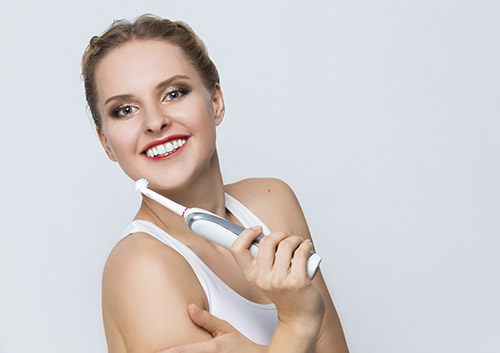
We’ve all learned a lot about keeping healthy lately. Thorough hand washing, disinfecting cell phones and keyboards, wiping down shopping carts and door handles—all these low-maintenance cleaning habits can have a high impact on our health.
So, in that spirit, let’s talk about low maintenance cleaning routines for something you put in your mouth at least twice a day—your toothbrush.
Brushing Habits
Don’t let germs hitch a ride on your toothbrush before you even begin! Make sure your hands are clean before brushing, and rinse off your toothbrush before you put it in your mouth.
After brushing, be sure to rinse your brush carefully to get rid of leftover toothpaste, food particles, and other debris. And don’t forget to clean your toothbrush holder regularly. Talk to Dr. Rick Johns or your hygienist when you visit our Highland, IN office for suggestions for deep cleaning brushes to eliminate bacteria if that’s a concern.
And while we’re talking about germs, how about…
- Flushing Habits
Most toothbrushes share their living space with another bathroom essential—the toilet. Every time we flush, microscopic particles are propelled through the air. And while no definitive relationship has been shown between flushing and disease transmission, closing the toilet lid before flushing is an easy way to reduce unpleasant particle transmission—and reduce the possible risk of toothbrush contamination.
- Airing? Yes!
Keeping a toothbrush in a dark, moist environment is the perfect setting for bacterial growth. Instead, let your toothbrush air dry after use in an upright position. Give it a shake first for a head start on the drying process.
- Sharing? No
We’re not talking about sharing a brush, which you would never do. We’re talking about sharing toothbrush holders. If your brush touches other brushes, you’re probably sharing germs as well as space, which can be especially problematic if someone in the house has immune concerns. Toothbrushes shouldn’t be too close to other toothbrushes, no matter how close you are to the other brush’s owner!
Finally, no matter how well you take care of your toothbrush, there comes a time when you must part with even the cleanest and best-maintained of brushes. After three or four months, bristles become frayed. This means you’re not getting the most effective plaque-removal from your brush. And to be on the safe side, consider retiring your toothbrush if you’ve been ill.
Dental self-care is a vital part of keeping yourself healthy, and a clean toothbrush is a simple way to support your oral health. High impact/low maintenance—win/win.
Does Your Child Need Endodontic Treatment?
June 7th, 2023

Baby teeth come with a built-in expiration date. That charming first smile is meant to make way for a healthy, beautiful adult smile. Unfortunately, before they are ready to make way for permanent teeth, primary teeth can be affected by decay, trauma, or infection—problems which can lead to damage to the pulp within the tooth. If your dentist tells you that your child’s tooth needs specialized endodontic treatment, is treatment really that much better for your child than losing a baby tooth prematurely?
Quite often, the answer is yes!
Baby teeth do much more than serve as temporary stand-ins for adult teeth. They are essential for:
- Biting and chewing—a full set of baby teeth helps your child develop proper chewing, which leads to healthy digestion. And chewing also helps build face and jaw muscles.
- Speech development—primary teeth help guide speech production and pronunciation.
- Spacing—a baby tooth serves as a place holder for the adult tooth waiting to arrive. If a primary tooth is lost too early, the remaining baby teeth may drift from their proper location. This, in turn, can cause overcrowding or misalignment of the permanent teeth when they do erupt.
Baby teeth, like adult teeth, contain living pulp tissue. The pulp chamber inside the crown (the visible part of the tooth) and the root canals (inside each root) hold nerves, blood vessels, and connective tissue. When the pulp is damaged by trauma or infected, a baby tooth can still be saved with endodontic treatment. Endodontic treatment in baby teeth can take two forms.
- “Vital” pulp is pulp that can be saved. Vital pulp therapy uses procedures to deal with damaged pulp inside the crown, or visible part, of the tooth. Pulp therapy can be used on teeth when only the top of the pulp has been affected by decay, limited exposure, infection, or trauma, but the root pulp remains healthy. Specific treatment will depend on the nature of the pulp injury, and a crown will usually be placed over the tooth after treatment to protect it.
- With non-vital pulp, your dentist will probably recommend a traditional root canal procedure. All of the pulp tissue will be removed from inside the crown and the roots, and the pulp chamber and root canals will then be cleaned, disinfected, shaped, and filled. Finally, because the treated tooth will be more fragile, a crown will be used to protect the tooth from further damage.
There can be good reasons for extracting a seriously damaged baby tooth, and there are situations where preserving the tooth is the best and healthiest option for your child. Discuss your options with Dr. Rick Johns when you visit our Highland, IN office for the safest, most effective way to treat your child’s compromised tooth.
Using Sippy Cups Successfully
June 7th, 2023
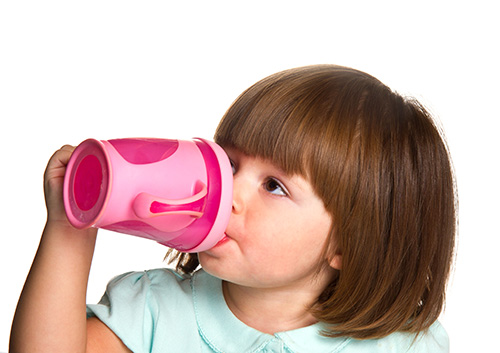
Congratulations! Your child is beginning to leave her bottle behind and has started to use her first sippy cup. And the best training cup is one that makes the transition from bottle to cup an efficient, timely, and healthy one.
The Right Training Cup
While a “no spill” cup seems like the perfect choice for toddler and parent alike, those cups are designed much like baby bottles. The same valve in the no-spill top that keeps the liquid from spilling requires your child to suck rather than sip to get a drink. If your child’s cup has a top with a spout, she will learn to sip from it. Two handles and a weighted base make spills less likely.
When to Use a Training Cup
Children can be introduced to a sippy cup before they are one year old, and we suggest phasing out the bottle between the ages of 12 and 24 months. Use a sippy cup as the source for all liquids at that age, and only when your child is thirsty and at mealtime to avoid overdrinking. The transition from sippy cup to regular cup should be a swift one.
Healthy Sipping Habits
The best first option in a sippy cup between meals is water. Milk or juice should be offered at mealtimes, when saliva production increases and helps neutralize the effects of these drinks on young teeth. And don’t let your child go to sleep with anything other than water—falling asleep with a cup filled with milk, juice, or other sugary drinks means these liquids stay in the mouth overnight. Finally, while a sippy cup is convenient and portable, don’t let your young child walk and sip at the same time to avoid injuries.
When your child comes to our Highland, IN office for her first visit, please bring any questions you might have about training cups. We would be glad to share ways to make the move from bottle to cup both successful and safe!
