






How Sedation Dentistry Can Help You Overcome Dental Anxiety
May 17th, 2023

Sometimes people feel a tiny bit nervous when they sit in the dental chair. And sometimes it’s more than a tiny bit. If your anxiety over visiting the office leads you to skip regular checkups and cleanings, or, worse, if you would rather suffer tooth or gum pain than give us a call—give our Highland, IN office a call! Sedation dentistry might be just the procedure you need to make dental anxiety a thing of the past.
Dr. Rick Johns and our team are trained to administer sedation and to monitor your responses throughout. And we want you to have all the information you need to decide on any dental treatment, including sedation. We will tell you of any risks, and describe the procedure in detail. If you have any health conditions or take any medications that might interfere with sedation, we can discuss your options with you and your doctor to make sure you are a good candidate. We will explain any preparations you should take, and let you know if there is a window of recovery time needed in our office while the sedation wears off.
Don’t let yourself suffer dental pain because you suffer from dental anxiety! Please call us to discuss sedation. We are trained to administer the treatment you choose gently and safely. Above all, we want to help you keep your smile the heathiest it can be, and that only happens when you have regular dental care. Let us work with you to make that care as comfortable and stress-free as possible.
Help! My gums hurt when I floss!
May 10th, 2023
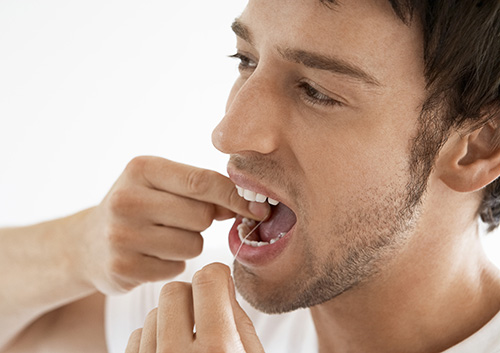
By no stretch is it rare for your gums to hurt during and after flossing. Even some bleeding is to be expected. This is especially true if you have not flossed in a long time. However, if your gums do indeed hurt when you floss, and unbearably so, there are some things you can do.
Be Gentle
Perhaps the most obvious way to combat gum soreness and bleeding is to be gentle. One of the most common occurrences of these gum problems is over-aggressive flossing. In other words, if you are too rough on your gums while flossing, either because you are out of practice or because you are in a hurry, soreness and hurting is to be expected. Instead, try taking your time and be gentle. Also, if you are just starting out, be patient and consistent, your gums will become more conditioned over time.
Use an Alternative Method
If being consistent and gentle does not work, there are other alternative methods of flossing that you can try. You can also try a water floss machine, or what is sometimes called a water pick. The device essentially shoots water into the crevasses between your teeth, and in other areas of your mouth, in order to dislodge food and plaque. These oral instruments also come with different attachments that allow you to reach many of the hard to see and reach areas of your mouth. And lastly, you can always buy floss that is not as abrasive to your gums. There is floss that comes with soft and gentle coatings that will do less harm to your gums while they are adjusting to the good oral hygiene habit you are creating.
Flossing is one of the easiest parts of oral hygiene to overlook. When you first start out, it is common that you may want to stop because of the pain it can initially cause. However, if you try one, or all, of the above mentioned methods, you will give yourself the best chance of being success with your flossing, and it won't hurt as much.
For more flossing tips, schedule an appointment at our Highland, IN office and askDr. Rick Johns or a member of our team!
How do I know if I need a root canal?
May 10th, 2023

Tooth decay affects everyone, with studies reporting that 92% of adults have had a cavity at one point in their lifetime. In more serious instances of tooth decay, however, the nerve of the tooth may become infected. This type of infection requires a root canal, in which the affected nerve is removed, and the interior of the tooth is cleaned and filled.
Tooth Anatomy
Although each tooth is covered by a hard outer shell, the interior of a tooth consists of dental pulp. This pulp is soft, containing blood vessels that bring nutrients to the tooth. Each tooth also has an associated nerve, which resides within a root canal passing from the tooth’s root into the dental pulp. This nerve provides information about temperature, allowing teeth to sense heat or cold.
Symptoms of Nerve Infection
Damage to the dental pulp or nerve tissue leads to a rapid multiplication of bacteria within the interior of the tooth. The result may be an abscess, a small pocket near the root of the tooth that becomes full of pus. This infected area commonly causes the following symptoms:
- Intense pain or sensitivity when pressure is applied to the tooth
- Sensitivity to hot or cold temperatures, even after the heat or cold has been removed
- Darkening or discoloration of the affected tooth
- A small, persistent pimple that forms on the gums
- Swollen or tender gums
- Swelling in other areas of the face, neck, or head
Nerve infection may occur due to deep decay, although repeated dental procedures, facial trauma, chipping or cracking of a tooth, or large fillings may also contribute to an abscessed tooth.
What to Do if You Think You Need a Root Canal
Only a visit to Dr. Rick Johns can confirm whether a tooth’s nerve has become infected. We will perform an oral examination and X-rays to confirm whether the tooth is abscessed. If a root canal procedure is needed, a small hole will be placed in the tooth. The pulp and nerve tissue are removed from the tooth, which is thoroughly cleaned and filled. Then, the hole is sealed with a special compound to prevent bacteria from entering the tooth’s interior. The entire procedure is performed under local anesthesia to numb pain.
If you think you may have tooth or nerve decay, call our Highland, IN office today to schedule a diagnostic appointment.
Ten Fun Things to Do with Your Old Toothbrush
May 3rd, 2023
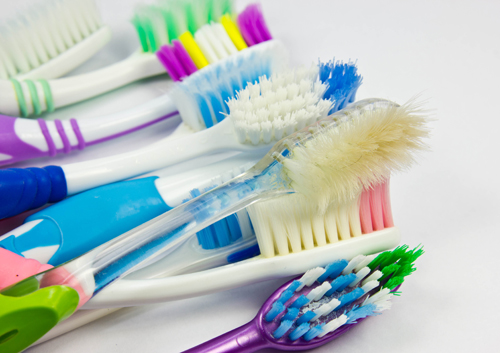
Dr. Rick Johns and our staff recommend that you replace your worn-out, germy toothbrush with a new one every three months. But most people either forget or resist getting rid of something that is still “working.”
Maybe if they had a few ideas for putting that old toothbrush to good use, more people would take our advice? To encourage good oral practices, we offer these ten fun things you can do with your used toothbrush:
1. Let your five-year-old budding Da Vinci create a masterpiece with some paint and your old toothbrush.
2. Scrub oily areas on your face with your toothbrush. The bristles are perfect for removing embedded dirt and oil that clogs pores.
3. Pamper your hamster by brushing his fur with an old toothbrush.
4. Dab a bit of Vaseline on the bristles and comb your eyelashes: instant glamour! Got dry, flaky lips? Slough away by using a toothbrush on your lips.
5. Remove the bristles: instant small plant stakes!
6. Old toothbrushes are great for spot-cleaning just about anything.
7. When nobody is around to scratch an unreachable itch on your back, turn that old toothbrush into your personal backscratcher.
8. Is your dog’s breath so bad that all your houseplants have died? Try brushing his teeth with your old toothbrush so that his kisses (and breath) are more tolerable.
9. Give your fish the cleanest tank in the neighborhood by scrubbing it with your old toothbrush.
10. Did you notice a few gray hairs sprouting from your hairline this morning? Old toothbrushes were made for touch-up dye jobs; works for dyeing your eyebrows, too!
