






Oral Cancer Facts and Figures
August 13th, 2019
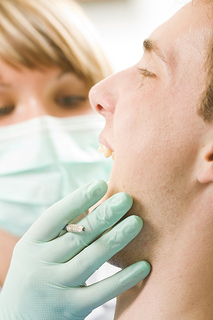
Oral cancer is largely viewed as a disease that affects those over the age of 40, but it can affect all ages, even non-tobacco and alcohol users. Oral cancer can occur on the lips, gums, tongue, inside lining of the cheeks, roof of the mouth, and the floor of the mouth. Our team at Rick Johns Dental recently put together some facts and figures to illustrate the importance of visiting our Highland, IN office.
Our friends at the American Cancer Society recommend an oral cancer screening exam every three years for people over the age of 20 and annually for those over age 40. Because early detection can improve the chance of successful treatment, be sure to ask Dr. Rick Johns and our team to conduct an oral exam during your next visit to our Highland, IN office.
- Symptoms of oral cancer may include a sore in the throat or mouth that bleeds easily and does not heal, a red or white patch that persists, a lump or thickening, ear pain, a neck mass, or coughing up blood. Difficulties in chewing, swallowing, or moving the tongue or jaws are often late symptoms.
- The primary risk factors for oral cancer in American men and women are tobacco (including smokeless tobacco) and alcohol use. Risk rises dramatically (30%) for people who both smoke and consume alcohol regularly.
- Oral cancers are part of a group of cancers commonly referred to as head and neck cancers, and of all head and neck cancers they comprise about 85% of that category.
- Oral cancer is the sixth most common cancer among men.
- Oral cancer is more likely to affect people over 40 years of age, though an increasing number of young people are developing the condition.
- Death rates have been decreasing over the past three decades; from 2004 to 2008, rates decreased by 1.2% per year in men and by 2.2% per year in women, according to the American Cancer Society.
- About 75% to 80% of people with oral cavity and pharynx cancer consume alcohol.
- The risk of developing oral cavity and pharynx cancers increases both with the amount as well as the length of time tobacco and alcohol products are used.
- For all stages combined, about 84% of people with oral cancer survive one year after diagnosis. The five- and ten-year relative survival rates are 61% and 50%, respectively.
- It is estimated that approximately $3.2 billion is spent in the United States annually on treatment of head and neck cancers.
Cancer can affect any part of the oral cavity, including the lip, tongue, mouth, and throat. Through visual inspection, Dr. Rick Johns and our team at Rick Johns Dental can often detect premalignant abnormalities and cancer at an early stage, when treatment is both less extensive and more successful.
Please let us now if you have any questions about your oral health either during your next scheduled appointment, by giving us a call or asking us on Facebook.
How do I know if my gums are receding?
August 6th, 2019

Gum recession, a common result of gum disease, occurs when the gum tissue that surrounds the teeth wears away or pulls back, forming pockets between the gumline and exposing more of the tooth. Gum recession occurs gradually, so you might not know that you have it. Left untreated, gum recession can result in tooth loss. In addition, there are several studies that suggest that gum disease is associated with modest increases in coronary heart disease. Here are five ways to know if your gums are receding.
1. Healthy gums are firm, light pink, and very elastic. If your gums don’t fit that description, then it’s time to visit our Highland, IN office. Red, swollen gums are a common symptom of gum disease, and may lead to gum recession.
2. Do your gums bleed easily when you brush or floss? If you have gum recession, even if you brush gently and with toothpaste specifically designed for sensitivity, it may still result in bleeding.
3. When you look in the mirror, do you see more of a tooth than you used to? This is one of the easiest ways to tell if you have gum recession. When gums recede, more of the tooth is visibly exposed. Look for lines or notches along the bottom of the teeth, as this typically indicates areas where the gums have receded.
4. One of the first signs of gum recession is tooth sensitivity. Does it hurt when you bite down or chew? The more gums recede, the more painful it is going to be. However, before you experience tooth sensitivity or pain, you may notice awkwardness when you bit down. When gum recession occurs, teeth can shift slightly, making it feel as if they are not properly aligned.
5. Loose teeth are a symptom of advanced gum recession and periodontal disease. In other words, the supporting bone structure of the teeth has already begun to deteriorate. If left untreated, it will result in tooth loss.
From deep cleaning (scaling) to gingival tissue grafting surgery, there are several ways to combat gum recession and periodontal disease. How gum recession is treated depends on how far advanced it is. Talk to Dr. Rick Johns about what options are best for you.
When to Begin Dental Care for Your Child
July 16th, 2019

Children’s oral health differs from that of adults in a variety of ways. Dr. Rick Johns and our team want you to understand how you can provide the best care for your son or daughter’s teeth. It’s essential to understand what your child will need from you when it comes to his or her oral health in those first few years.
In-home dental care begins when your baby starts to show signs of developing the first tooth. We recommend that you bring your child to our Highland, IN office between the ages of one and two. Dr. Rick Johns will take a look at your child’s tooth development and gums during this first scheduled appointment.
The initial appointment with your little one is designed to get him or her accustomed to our office. We recommend allowing your child to be in the exam room alone with us during the first visit in order to become comfortable with our staff at an early age.
We will go over several general matters during your child’s first visit:
- Look for signs of decay or other tooth or gum problems
- Make sure your youngster doesn’t have gum disease or cavities
- Examine your child’s bite, and check for misalignment that could lead to problems in the future
- Clean the teeth, and apply fluoride if your son or daughter is old enough
- Talk to you about proper oral health care for your
- Give you some tips for brushing and flossing your child’s teeth
- Answer any questions you may have about caring for your little one’s teeth
Once your child is old enough for his or her first visit to the dentist, you should begin to schedule regular cleanings every six months. If any problems arise before a scheduled appointment, call our Highland, IN location and we will be happy to answer any questions you may have.
Remember, creating healthy oral health habits with your child early on is crucial. We’re here to guide you through this process and make sure your child is healthy and happy.
Brushing Tips for Kids
July 9th, 2019
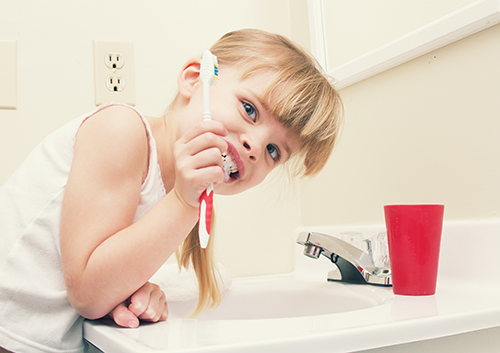
You’re all set for your happy morning and nighttime ritual. You’ve provided your son with his favorite action hero toothbrush and your daughter with her favorite flavored toothpaste. You’ve gotten them into the healthy habit of two minutes of brushing twice each day. You’ve introduced them to flossing. You have favorite brushing songs! Stickers! Gold stars! And, best of all, you’re teaching great brushing techniques.
Kids need the same basic brushing tools and skills as adults. What makes for the best cleaning?
Find the right brush
No matter how cute—or heroic—the brush, it needs to have soft bristles to protect enamel and delicate gum tissue. The head should be a perfect fit for your child’s mouth. And if the handle is easy to grip and hold, you have a winner.
Find the right toothpaste
The bubblegum flavor might appeal to your child, but it’s the fluoride that helps to prevent cavities. Talk to us about the right time to start using fluoride toothpaste and the right amount for your child’s brush.
Teach your child the angles
If your child is too young to brush alone, start geometry lessons early. Holding the brush at a 45-degree angle toward the gums will clean bacteria and plaque from the tooth surface and the gum line. And don’t forget the chewing surfaces and the insides of the teeth. When your child begins brushing on her own, coach her as she learns the best way to clean all the surfaces of her teeth.
Easy does it
Teeth and gums should be massaged, not scrubbed. Brushing too hard can damage not only tender gum tissue, but even your child’s enamel.
Learn to let go
No matter how comfortable and appealing the brush, after three or four months, it’s time for a change. Frayed bristles don’t clean as effectively, and making up for it by brushing harder isn’t the answer (see above). Also, toothbrushes can build up quite a collection of bacteria over time (see below), so a fresh brush is a must!
Everything in its place
A toothbrush should dry thoroughly between uses without touching other brushes. Placing a brush in a plastic container doesn’t let it dry and encourages bacterial growth. And a toothbrush needs its own space—touching toothbrush heads means sharing toothbrush bacteria. The best way to keep toothbrushes as dry and as germ-free as possible is to store them upright, without touching other brushes, in a clean, well-ventilated area.
Rinse and repeat
Your child should rinse his toothbrush before and after using it, and be sure to rinse his mouth as well. That should get rid of any leftover food particles brushing has removed.
Finally, keep up the good work! As you teach your child proper brushing techniques, and make sure she uses them as she grows, you are preparing her for a lifetime of great checkups with Dr. Rick Johns at our Highland, IN office. Give yourself a gold star—you’ve earned it!
