






Summer Sports and Mouthguards
July 2nd, 2019

School’s out and you’ve emptied your gym locker until next fall. But while you’re stowing away the football gear, the basketball warm-ups, the field hockey sticks, and all the other equipment you’ve collected over the school year (that’s where that other shoe went!), be sure to keep one item handy: your mouthguard.
Team and contact sports like football, basketball, and wrestling aren’t the only potential dental dangers. In fact, almost any sport or activity can be made safer when you use your mouthguard. While you’re keeping active and fit in the summer months, remember to look out for your smile.
- Sports on wheels
Biking, skate boarding, rollerblading—it only takes one fall to make you realize that roads, sidewalks, and concrete are not ideal landing pads. If you do take a spill, using a mouthguard, along with your helmet, will help protect your teeth and jaw.
- Court sports
Handball and tennis are not what we consider contact sports, but an unexpected bounce from a ball, or a completely unexpected backhand from your partner, can lead to dental injuries. Ace your workout and wear a mouthguard.
- Water sports
A fall in the water can lead to a collision with your surfboard or water skis, and water polo often seems to be a game of stamina, accuracy and elbows. Wear your mouthguard on land and sea, and help reduce your chance of dental injury.
- Team sports
Anyone who has played summer league baseball, softball or soccer knows that occasional contact with other players is pretty much a given. Cushioning your head, mouth, and teeth with a mouthguard will not only protect you, but keep you in the game—and your teammates will appreciate that!
If you already use a mouthguard, keep up the good work! If you don’t, talk to Dr. Rick Johns about the importance of protecting your smile with a mouthguard. There are ready-made options available at drug stores and sporting goods shops. These will provide protection to your mouth and teeth, but can sometimes be bulky and uncomfortable and should never be used with braces. If you would like a mouth protector that provides the best fit and comfort, or if you wear braces, we can customize a mouthguard in our Highland, IN office that will be a perfect fit for your teeth and bite.
Whatever activity you choose, play it smart! Don’t gear up without your mouthguard, and you’ll greet next year’s classes energized, fit, and sporting a beautiful smile!
Implants: Why It’s Important to Replace Missing Teeth
June 25th, 2019

Sometimes, despite our best care, we lose a tooth. If it is a front tooth, it will probably be a high priority to replace. But if a missing tooth doesn’t show when we smile, what’s the hurry? Let’s look at the reasons why prompt replacement with an implant is always a good idea, no matter which tooth is involved.
Appearance
Implants look like natural, individual teeth, but that is not the only aesthetic reason to replace a lost tooth. Without some type of tooth replacement, missing teeth can eventually affect the structure of our jawbones and change our facial appearance. Cheeks, lips, profiles—all are impacted by the changes in our bones resulting from tooth loss.
Better Bite
Nature abhors a vacuum, and so do our teeth. When a space is left by a missing tooth, the teeth around it might shift positions, affecting the even pattern of our bite. And without a tooth to keep it in place, a tooth above or below the missing one might begin to grow longer to fill the void in your bite. This lengthening, in turn, can cause even more bite problems.
Chewing
With the loss of only a single tooth, there is a negative impact on the remaining teeth. More pressure is placed on the other teeth in order to chew properly, front teeth not meant for chewing might need to be used for that purpose, or food is not chewed as thoroughly as it should be. The first two problems are not healthy for our teeth, and the last one is not healthy for digestion!
Don’t Delay
Changes in bite and chewing problems probably won’t happen overnight, so is putting off the process really a big deal? It can be! Time is not on our side when a tooth is lost. The bone tissue which supports our teeth needs the stimulation of biting and chewing to stay healthy. Without that stimulation, the bone area under the missing tooth gradually shrinks. If there is not enough bone area left, you might need surgical bone grafting to achieve the right bone height to hold an implant, or it could lead to the impossibility of placing an implant at all.
Expense
Replacing a lost tooth quickly requires less restoration of the gums and bone in the future and prevents other serious problems from developing.
We could continue through the alphabet, but instead, come talk to Dr. Rick Johns about all the reasons a tooth implant might be your best option. Whether you have already lost a tooth, or if you have an extraction scheduled at our Highland, IN office, we are happy to recommend the best procedure at just the right time to make your smile beautiful, healthy, and complete!
Whitening Teeth with Braces
June 18th, 2019

Now that you are working hard to improve your dental health and appearance with your braces, it might seem like a logical time to whiten your teeth as well. But should you go ahead with home kits or a professional whitening? The answer might be yes, but not quite yet!
Toothpaste
The easiest way to whiten teeth is regular use of a whitening toothpaste. But these do not make a major difference in tooth color and may also contain abrasives which can damage ceramic brackets and make them more likely to stain. And, whether you have metal or ceramic braces, the brackets used are bonded to your teeth. Any part of your tooth covered by a bracket will not be affected by the whitening paste. Ask our office if you are thinking of using one of these products. We will be happy to recommend the best toothpastes to use while your braces are in place.
Whitening Strips and Trays
Whiteners can be applied at home with strips or tray kits. Strips are coated with a whitening gel and then pressed around your teeth. Tray kits provide a mouthguard-like appliance, which is filled with whitening gel. But neither strips nor tray solutions will whiten any area covered by brackets. When your braces come off, there might be noticeable differences in color on each tooth. Strips are difficult to apply with braces, and trays need to be custom-designed to fit your braces and make sure they don’t disturb your orthodontic work. One size most definitely does not fit all! Finally, these whitening agents can cause tooth and gum sensitivity, especially around the time of adjustments. Many manufacturers do not recommend using their products while you have braces. Please talk to us if you are thinking of using them.
Professional Whitening
A dental professional can whiten your teeth in office for the best possible results. The most effective treatments for your unique teeth are combined with protective care of your gums and mouth. Whether this treatment is appropriate while you have braces is something we are happy to discuss.
The best way to keep your teeth bright is to keep up your regular dental routine! Brushing and flossing are more important than ever now, because plaque builds up around brackets. Avoid foods that stain teeth and rinse or brush after every meal and snack. Dr. Rick Johns will show you the best way to take care of your teeth while your braces are on—and that includes the best way to keep them white and bright. Talk to us about the perfect time to whiten your beautiful smile during your next visit to our Highland, IN office. And if you have to wait a few extra days for the smile you’ve been working toward, truly, the wait will be worth it!
Curing the Nail-Biting Habit
June 11th, 2019
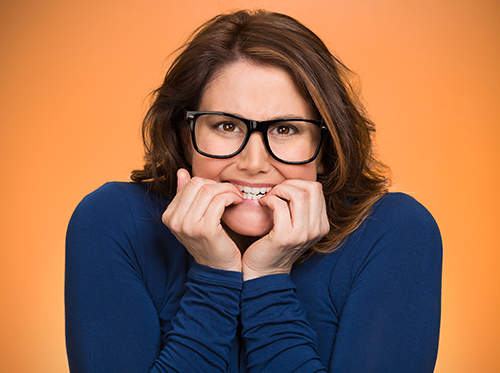
Do you ever find yourself gnawing at your nails? Nail-biting is a very common and difficult to break habit which usually has its beginnings in childhood. It can leave your fingers and nail beds red and swollen. But if you think that your nails are the only ones getting roughed up by nail-biting you'd be mistaken—so are your teeth!
According to a study by the Academy of General Dentistry, those who bite their nails, clench their teeth, or chew on pencils are at much higher risk to develop bruxism (unintentional grinding of the teeth). Bruxism can lead to tooth sensitivity, tooth loss, receding gums, headaches, and general facial pain.
Those are some nasty sounding side effects from chewing on your nails. Most nail-biting is a sign of stress or anxiety and its something you should deal with. So what steps can you take if you have a nail-biting habit?
There are several things you can do to ease up on nail-biting:
- Trim your nails shorter and/or get regular manicures – Trimming your nails shorter is an effective remedy. In so doing, they'll be less tempting and more difficult to bite on. If you also get regular manicures, you’ll be less likely to ruin the investment you’ve made in your hands and fingernails!
- Find a different kind of stress reduction – Try meditation, deep breathing, practicing qigong or yoga, or doing something that will keep your hands occupied like squeezing a stress ball or playing with a yo-yo.
- Wear a bitter-tasting nail polish – When your nails taste awful, you won't bite them! Clear or colored, it doesn't matter. This is also a helpful technique for helping children get over the habit.
- Figure out what triggers your nail-biting – Sometimes it's triggered by stress or anxiety and other times it can be a physical stressor, like having hang nails. Knowing what situations cause you to bite your nails will help you to avoid them and break the habit.
- Wear gloves or bandages on your fingers – If you've tried the steps above and they aren't working, this technique can prove effective since your fingernails won't be accessible to bite.
If you're still having trouble with nail-biting after trying these self-help steps, it's best to consult your doctor, dermatologist, or Dr. Rick Johns. For some, it may also be the sign of a deeper psychological or emotional problem.
Whatever the cause, nail-biting is a habit you need to break for your physical and emotional well-being. If you have any questions about the effects it can have on your oral health, please don't hesitate to ask Dr. Rick Johns during your next visit to our Highland, IN office.
